
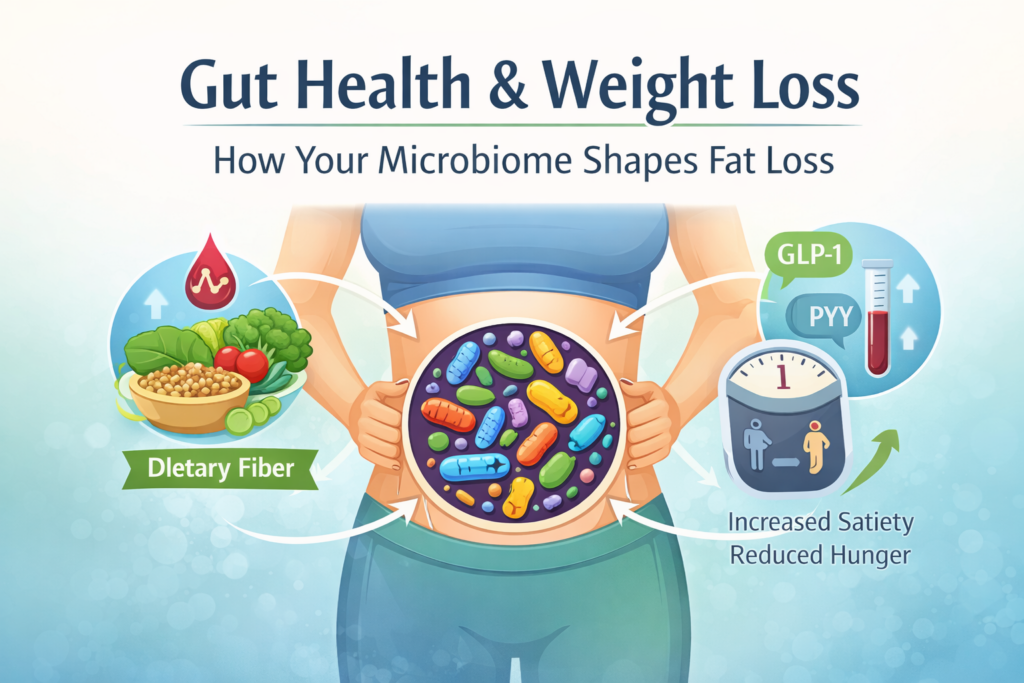
Gut health and weight loss are deeply connected. While people often focus on calories, gut health and weight loss also affect appetite, cravings, digestion, and blood sugar. Your gut microbiome influences fullness, energy, and how easily you can maintain a calorie deficit
Improving gut health and weight loss doesn’t require detoxes or extreme diets. Gut health and weight loss improve when you increase fiber, expand plant variety, and support a balanced microbiome that regulates hunger hormones like GLP-1 and PYY. Better gut function reduces friction, improving consistency and making fat loss easier to manage.
Key Takeaways
- Gut bacteria help convert fiber into short-chain fatty acids that can influence appetite hormones like GLP-1 and PYY.
- Better gut-supportive eating does not replace a calorie deficit, but it can improve satiety and consistency.
- Fermented foods increased microbial diversity and reduced inflammatory markers in a human diet study.
- WHO guidance supports aiming for at least 25 g/day of naturally occurring fiber and 400 g/day of fruits and vegetables.
- Probiotics are strain-specific and not a guaranteed weight loss tool, and safety matters for some groups.
What actually is Gut Health?
Gut health and weight loss go hand in hand. Gut health refers to your digestive system’s efficiency, how well you digest food, the regularity of bowel movements, and the balance of your microbiome. A healthy gut lining absorbs nutrients, protects against irritation, and communicates with your immune system. Good gut health means fewer digestive issues and better energy and appetite control, making weight loss easier.
Your gut microbiome plays a key role in gut health and weight loss. It helps break down fiber and resistant starches, producing compounds that affect the gut lining, immune system, and hormones that regulate appetite and glucose
People usually find this topic because they want a direct answer: can fixing your gut help you lose weight. The cleanest answer is that gut health and weight loss indirectly by shaping hunger, digestion comfort, cravings, and metabolic signals that affect how consistently you can maintain your plan.
How Your Microbiome Affects Fat Loss
The following are ways that your microbiome affects how you lose or don’t lose weight
1) Fiber Fermentation and Appetite Hormones
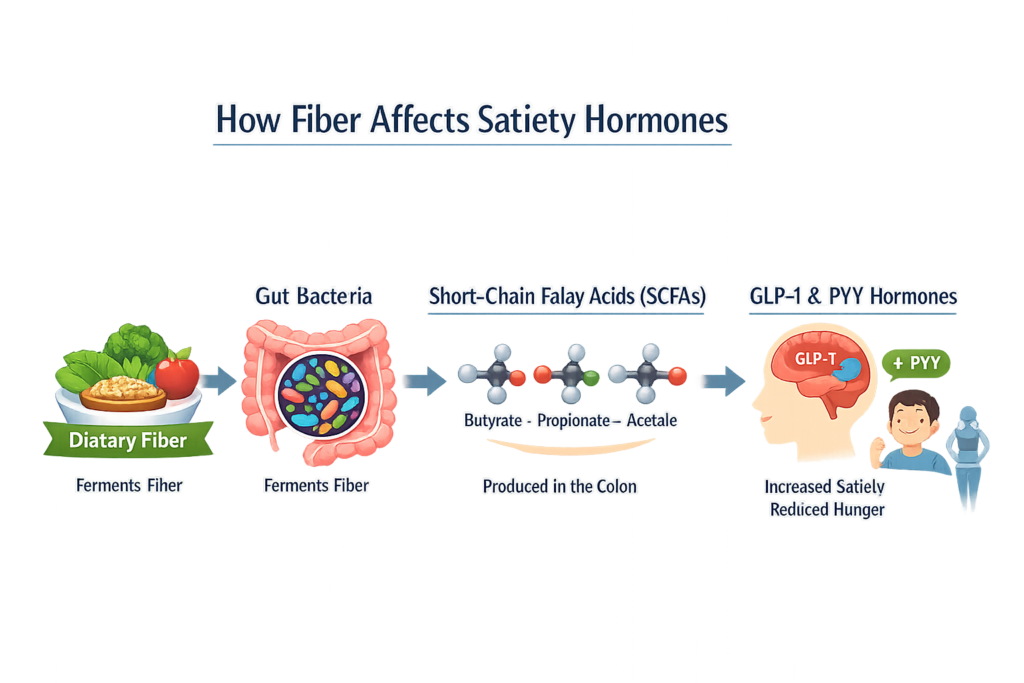
this is the clearest pathway to showing the relation between gut health and weight loss. Fiber feeds microbes, and the byproducts can affect fullness signals that make dieting easier to stick to.
- Gut bacteria ferment fiber and produce short-chain fatty acids linked to fullness signaling.
- Human research on targeted propionate delivery showed increased PYY and GLP-1 plus reduced energy intake and less weight gain over time.
- Mechanistic studies support that short-chain fatty acids can stimulate GLP-1 secretion through gut receptors.
- If you are always hungry in a deficit, improving fiber quality and consistency often helps adherence more than a supplement.
2) Inflammation, Gut Barrier Signaling, and Metabolic Friction
Inflammation is often framed as the main culprit, but the real value is practical. Poor gut comfort and low-quality eating patterns can make hunger, energy, and consistency harder to manage.
- A “stuck” phase is usually driven by sleep, stress, diet quality, and inconsistent calorie deficit, not one hidden issue.
- Poor gut comfort and low-quality eating patterns can add friction and make consistency harder.
A Stanford-led dietary intervention found higher fermented food intake increased microbiome diversity and decreased multiple inflammatory markers. - The takeaway is not “inflammation causes fat gain,” but that gut-supportive habits can improve appetite, energy, and consistency.
3) Blood Sugar Stability and Cravings
Many people interpret cravings as low willpower, but meal structure is usually the driver. Gut-related signals and smarter fiber choices can support steadier hunger and energy patterns.
- Many cravings come from patterns like low-fiber meals that digest fast and leave you hungry again quickly.
- Gut-derived compounds interact with GLP-1 pathways tied to glucose control and appetite regulation.
- Better fiber quality and meal composition often improves steadier energy and reduces reactive snacking.
- Gut health strategies work best when they reinforce basic nutrition, not replace it.
4) Why People React Differently to the Same Diet
Two people can eat the same plan and get different results. Part of that is lifestyle and physiology, and part can be differences in digestion comfort and appetite signaling.
- Results vary due to NEAT, sleep debt, stress, hormones, insulin sensitivity, and medications.
- The microbiome can influence digestion comfort, satiety, and metabolic signaling, affecting how hard dieting feels.
- It does not override energy balance, but it can impact adherence by changing hunger and comfort.
- Explaining this variability builds trust better than promising one “perfect” protocol.
5) Supplements, Probiotics, and “Gut Reset” Marketing
This is where the internet gets loud and the evidence gets messy. The safest, most accurate approach is to treat supplements as optional support tools, not fat loss drivers.
- Probiotics may help specific digestive complaints, but weight loss effects are inconsistent and strain-specific.
- Safety and quality matter because products vary and rare serious infections have occurred in high-risk groups.
- “Gut reset” marketing often overpromises compared to what human evidence can support.
- The strongest positioning is gut comfort first, then linking that to appetite control and consistency, not direct fat burning.
Gut Health and Weight Loss: Key Mechanisms
| Gut Health Mechanism | How It Supports Weight Loss | Action Steps |
| Fiber Fermentation into Short-Chain Fatty Acids | Supports satiety by influencing hormones like GLP-1 and PYY | Increase fiber slowly; add legumes, oats, seeds, and resistant starch. |
| Microbial Diversity | Reflects a resilient gut ecosystem, promoting better metabolism | Eat more plant variety across the week. |
| Inflammation-related Signaling | Reduces inflammation, making fat loss easier | Add fermented foods (e.g., kimchi, sauerkraut) and reduce ultra-processed foods. |
| Digestion Comfort & Regularity | Improves comfort, reducing hunger and cravings | Hydrate, adjust fiber pace, and build meals around whole foods. |
| Probiotics | Helps with specific symptoms but not guaranteed for fat loss | Use food-first; select strain-specific probiotics, and follow safety guidance. |
Best Foods for Gut Health and Weight Loss
A list is only helpful if it tells readers what to actually shop for and eat. These food categories tend to support microbial health while improving satiety per calorie.
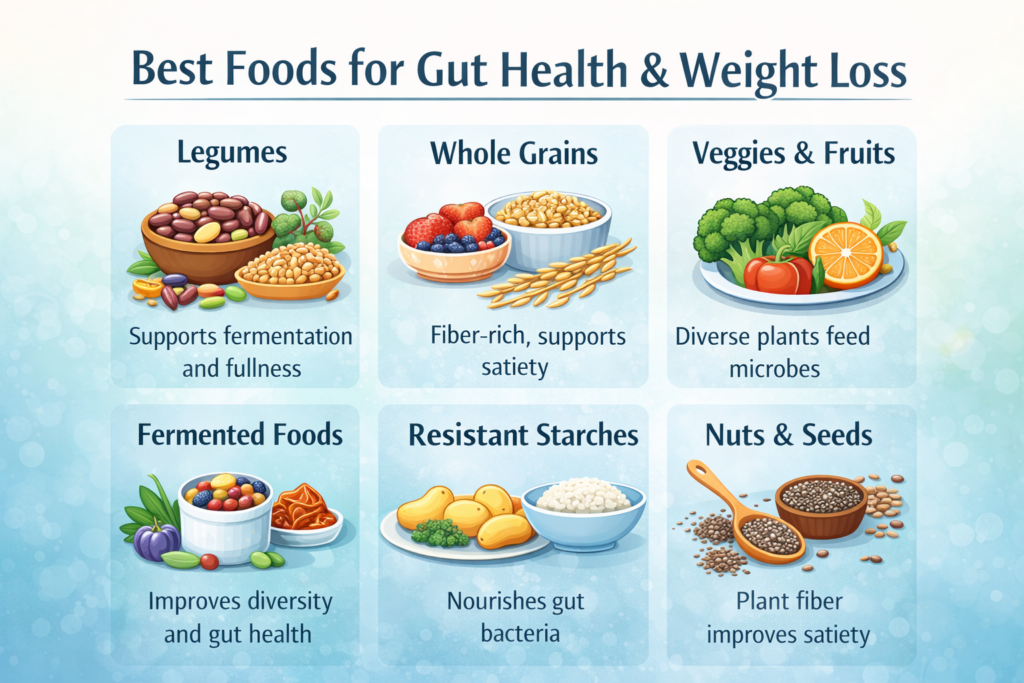
- Legumes like beans, lentils, chickpeas
- Whole grains like oats, barley, brown rice
- Vegetables and fruits across many colors
- Nuts and seeds like chia, flax, pumpkin seeds
- Fermented foods like yogurt, kefir, kimchi, sauerkraut if tolerated
- Resistant starch foods like cooked and cooled potatoes or rice
How to Increase Fiber Without Bloating or Quitting
Most people fail the “eat more fiber” advice because they do too much, too fast. Use a ramp-up strategy.
- Add one high-fiber food per day for 3 to 4 days before adding another
- Drink more water as fiber rises
- Split fiber across meals instead of stacking it in one meal
- Start with cooked vegetables and oats if raw salads upset your stomach
- Use smaller servings of legumes at first, then increase
Gut-Friendly Foods That Support Fat Loss
This table turns gut health concepts into meal building choices you can repeat. Each food type supports the microbiome in a slightly different way, such as feeding beneficial bacteria, improving fermentation, or supporting steadier appetite signals. Use it to create meals that feel more filling and easier to stay consistent with during fat loss.
| Food type | Why it helps gut health and weight loss | Easy use |
| Beans and lentils | High fiber, supports fermentation and fullness | Add to bowls, soups, salads |
| Oats and barley | Viscous fiber supports satiety | Oatmeal, overnight oats, barley salads |
| Yogurt or kefir | Fermented option, often high protein | Choose plain, add fruit and nuts |
| Kimchi or sauerkraut | Fermented vegetables in small portions | Add 1 to 2 tablespoons to meals |
| Cooked and cooled starch | Resistant starch feeds microbes | Meal prep, cool, reheat later |
| Berries and colorful plants | Supports plant variety and diet quality | Rotate colors weekly |
Common Mistakes That Hurt Gut Health and Weight Loss
Most gut health and weight loss plans fail for the same few reasons. People either treat supplements like shortcuts, cut too many foods, or change fiber intake too fast and end up uncomfortable. The goal is to support your gut in a way that makes a calorie deficit easier to maintain, not harder. Use the mistakes below as a quick checklist and adjust what applies to you.
Mistake 1: Treating probiotics as a fat loss shortcut
Probiotics are not a stand-in for fiber, protein, and a sustainable calorie deficit. If you use them, tie them to a specific goal like regularity or post-antibiotic support and track outcomes.
Mistake 2: Cutting too many foods and losing diversity
Extreme elimination diets often reduce plant variety and fiber. They can help short term for specific symptoms in some cases, but they often weaken the long-term microbiome inputs that support sustainable eating.
Mistake 3: Pushing “clean eating” while ignoring calories
Many readers eat “healthy foods” but still overeat energy-dense portions like oils, nuts, granola, and large smoothie add-ons. Gut-friendly eating should improve satiety so calorie control becomes easier, not more confusing.
Mistake 4: Increasing fiber too fast and blaming the food
Jumping from low fiber to very high fiber in a few days can cause bloating, gas, and discomfort. People often interpret that as “fiber doesn’t work for me,” then quit before their gut adapts. A slower ramp-up usually fixes the problem.
Mistake 5: Relying on ultra-processed “gut health” products
Protein bars, fiber gummies, and “greens powders” can be useful occasionally, but they can also crowd out real meals and plant variety. Many of these products are low in true diversity and still easy to overconsume. Whole-food fiber and consistent meal patterns usually do more for both gut comfort and fat loss.
Conclusion
Gut health and weight loss connect through mechanisms that affect how you feel and how consistently you can follow your plan. Your microbiome helps turn fiber into short-chain fatty acids that can influence satiety hormones like GLP-1 and PYY, which can shape hunger and snacking patterns. Fermented foods have human evidence for increasing microbiome diversity and lowering inflammation markers, which can support a healthier metabolic environment over time. The highest-impact strategy is still simple: build meals around fiber, plant variety, adequate protein, and minimally processed foods, then keep the calorie deficit realistic so you can repeat it for months. If your supplement brand supports this foundation instead of trying to replace it, you will earn the kind of trust that helps both rankings and conversions.
FAQ
Can gut bacteria cause weight gain?
Gut bacteria can influence hunger signals, digestion comfort, and glucose handling. That can shape cravings and eating patterns in a way that makes weight gain more likely. It still does not override calorie balance, but it can affect how easy consistency feels.
How long does it take to improve gut health for weight loss?
Some microbiome changes can happen within a few weeks after improving diet quality. More meaningful, lasting progress usually takes weeks to months of steady fiber, plant variety, and better meal structure. In one fermented-food diet intervention, changes were observed across about 10 weeks.
Do probiotics help with belly fat?
Probiotics may improve digestion for some people, depending on the strain and the person. Weight loss effects are inconsistent and usually small when they show up. Product quality and safety matter, especially for higher-risk groups.
What is a good daily fiber goal for gut health and weight loss?
A practical baseline is about 25 g of naturally occurring fiber per day and around 400 g of fruits and vegetables. If you are currently low fiber, increase gradually to improve tolerance. Spreading fiber across meals often reduces bloating.
What are the best foods for gut health and weight loss?
Prioritize beans and lentils, oats and barley, vegetables, fruits, nuts, and seeds. Fermented foods like yogurt or kefir can help if tolerated. These foods support microbial fuel and satiety, which makes dieting easier to stick to.
What should I do if fiber makes me bloated?
Increase fiber slowly and keep each step for a few days before adding more. Drink more water and spread fiber through the day rather than stacking it in one meal. Start with cooked vegetables and oats, then build up legumes gradually.
References
- World Health Organization (WHO). (2026). Healthy diet (Fact sheet). WHO. Available at: https://www.who.int/news-room/fact-sheets/detail/healthy-diet
- Wastyk, H.C., Fragiadakis, G.K., Sonnenburg, J., Gardner, C., et al. (2021). Gut Microbiota-Targeted Diets Modulate Human Immune Status. Cell. Available at: https://pmc.ncbi.nlm.nih.gov/articles/PMC9020749/
- Stanford School of Medicine. (2021). Fermented-food diet increases microbiome diversity, decreases inflammatory proteins, study finds. Stanford Medicine. Available at: https://med.stanford.edu/news/all-news/2021/07/fermented-food-diet-increases-microbiome-diversity-lowers-inflammation
- Chambers, E.S., et al. (2015). Effects of targeted delivery of propionate to the human colon on appetite regulation, body weight maintenance and adiposity in overweight adults. Gut. Available at: https://gut.bmj.com/content/64/11/1744
- Tolhurst, G., et al. (2012). Short-Chain Fatty Acids Stimulate Glucagon-Like Peptide-1 Secretion via the G-Protein–Coupled Receptor FFAR2. Diabetes. Available at: https://diabetesjournals.org/diabetes/article/61/2/364/14608/Short-Chain-Fatty-Acids-Stimulate-Glucagon-Like
- International Scientific Association for Probiotics and Prebiotics (ISAPP). (2025). Probiotics. ISAPP. Available at: https://isappscience.org/probiotics/