
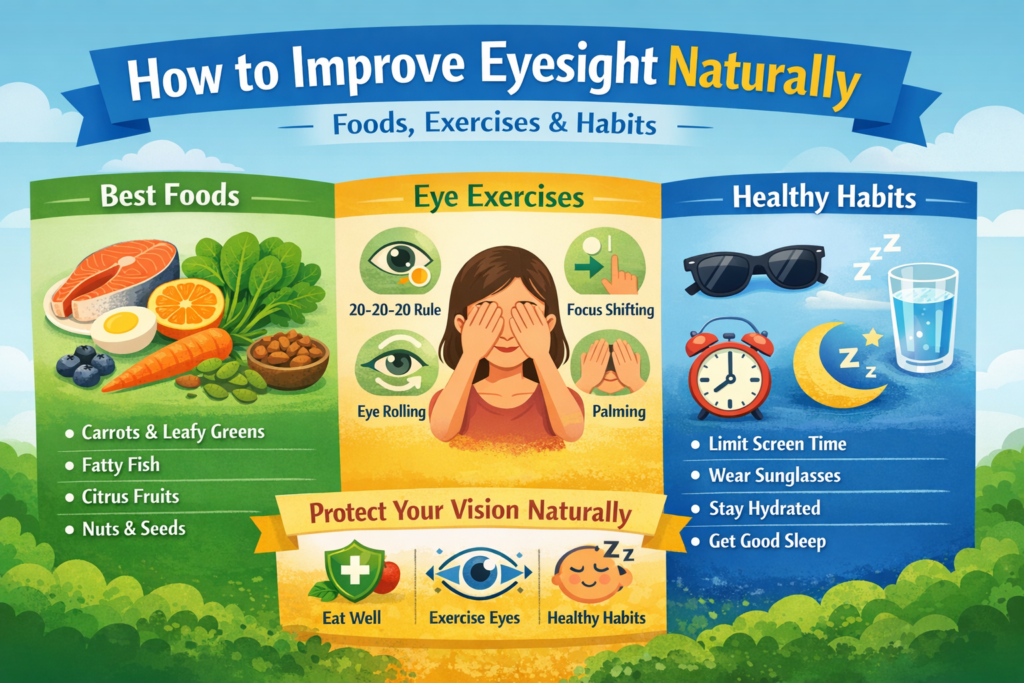
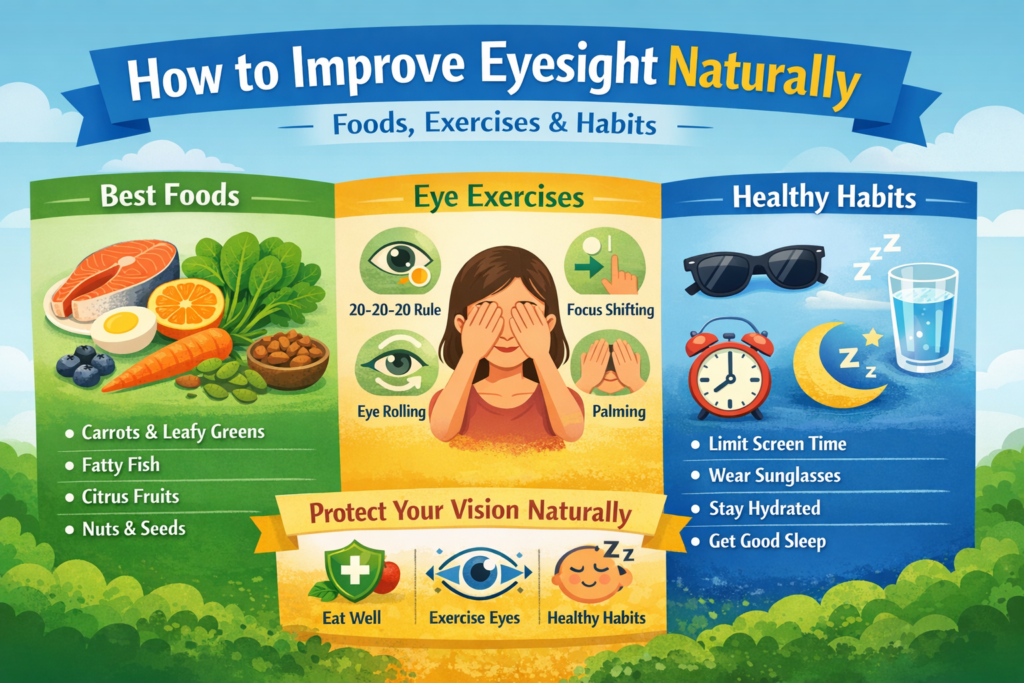
Improving eyesight naturally is possible by supporting your eyes with the right nutrition, exercises, and healthy habits. Modern lifestyles, especially long screen time and poor diet, can strain the eyes and weaken vision over time. By focusing on nutrient-rich foods, simple eye exercises, and daily protective habits, you can reduce eye fatigue and maintain clear vision. Natural methods help strengthen eye muscles, protect the retina, and slow age-related decline. While they may not replace medical treatment, they play an important role in long-term eye health.
Key Takeaways
- A balanced diet rich in vitamins A, C, E, omega-3s, lutein, and zinc supports healthy vision.
- Simple eye exercises can reduce strain and improve focus flexibility.
- Limiting screen time and following the 20-20-20 rule protects against digital eye strain.
- Proper sleep and hydration help eyes recover and function effectively.
- Wearing sunglasses protects against harmful UV damage.
- Consistent healthy habits help maintain clear eyesight and prevent vision decline.
What Causes Weak Eyesight?
Weak eyesight is a common issue that affects people of all ages due to modern lifestyle habits and natural aging. Long hours of screen use, poor nutrition, lack of sleep, and exposure to harmful light can gradually strain the eyes. Vision problems may appear as blurry sight, difficulty focusing, headaches, or eye fatigue. In many cases, daily habits play a major role in weakening eye function over time.
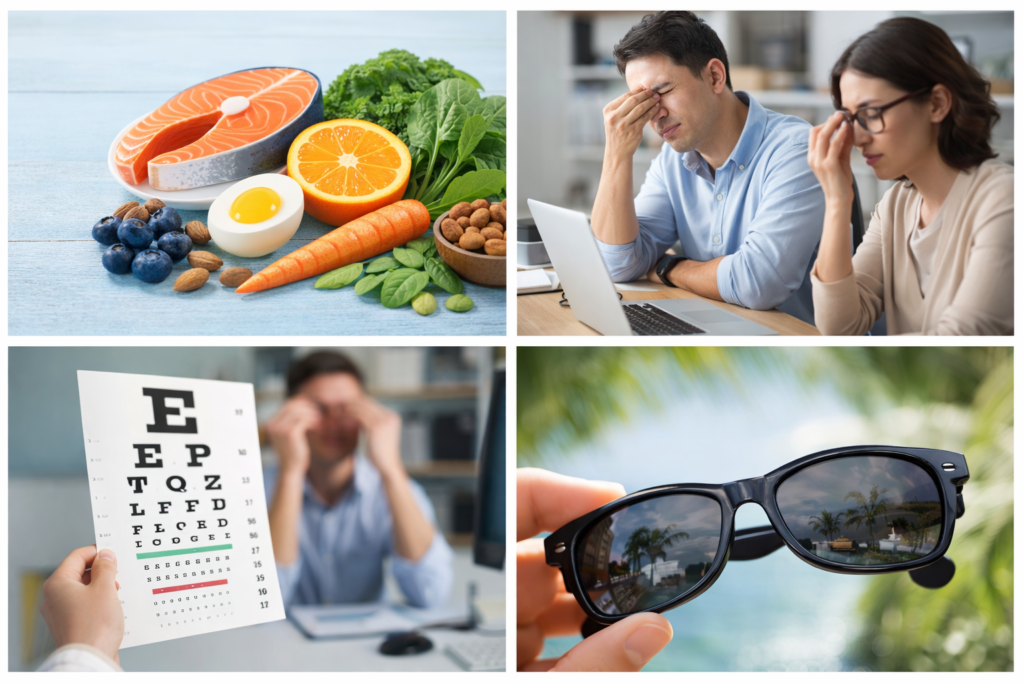
While some vision changes are genetic, proper care and healthy choices can help protect and support long-term eye health. Understanding the causes of weak eyesight is the first step toward improving vision naturally.
Top 8 Key Components That Influence Eyesight
Improving eyesight naturally requires supporting the main systems that affect eye health. The most important components include:
1. Proper Nutrition
The eyes need vitamins A, C, E, zinc, omega-3 fatty acids, lutein, and zeaxanthin to function properly. Poor diet can weaken retinal health, reduce night vision, and increase the risk of long-term vision problems. Eating a balanced diet rich in colorful fruits, vegetables, and healthy fats supports overall eye strength and protection against age-related damage.
2. Eye Muscle Strength & Flexibility
Like other muscles, eye muscles benefit from regular focus-shifting and relaxation exercises. Strengthening these muscles helps reduce strain and improve coordination between near and distant focus. Consistent practice may improve visual comfort, especially for people who work long hours on screens.
3. Digital Eye Strain Control
Excessive screen time reduces blinking and increases dryness and irritation. Following healthy screen habits protects against long-term fatigue and discomfort. Adjusting screen brightness, maintaining proper distance, and using blue-light filters can further reduce strain.
4. Blood Circulation
Healthy circulation ensures oxygen and essential nutrients reach the eyes. Regular physical activity supports better eye tissue function and overall visual performance. Good circulation also helps maintain healthy blood vessels in the retina.
5. Rest & Recovery
Quality sleep allows the eyes to repair from daily stress. Lack of sleep may lead to redness, dryness, twitching, and reduced focus. Proper rest improves tear balance and reduces inflammation around the eyes.
6. UV & Environmental Protection
Exposure to harmful UV rays, dust, and pollution can damage sensitive eye tissues. Wearing sunglasses and maintaining clean environments helps protect vision. Long-term UV exposure may increase the risk of cataracts and macular damage.
7. Hydration & Tear Production
Proper hydration supports natural tear production, which keeps eyes lubricated and prevents irritation or dryness. Drinking enough water daily helps maintain clear and comfortable vision.
8. Stress Management
Chronic stress may affect blood flow and increase eye tension. Relaxation techniques help maintain comfortable and balanced vision. Deep breathing and mindfulness practices can reduce eye strain caused by tension.
Top Natural Ways to Improve Eyesight
Improving eyesight naturally involves a combination of proper nutrition, eye exercises, protective habits, and healthy lifestyle choices. Your eyes depend on essential nutrients, good blood circulation, adequate rest, and protection from strain and environmental damage. By consistently following simple daily practices, you can reduce eye fatigue, support retinal health, and maintain clear vision over time. The table below summarizes the key areas that help strengthen and protect eyesight naturally.
| Category | What to Do | Key Nutrients / Action | How It Helps Vision |
| Eye-Healthy Foods | Eat carrots, spinach, salmon, citrus fruits, nuts | Vitamin A, C, E, Omega-3, Lutein, Zinc | Protects retina, reduces inflammation, supports night vision |
| Eye Exercises | Follow 20-20-20 rule, focus shifting, eye rolling | Muscle flexibility & relaxation | Reduces eye strain and improves focus control |
| Screen Protection | Take breaks, adjust brightness, use blue-light filters | Reduced digital strain | Prevents dryness, fatigue, and headaches |
| Hydration | Drink enough water daily | Tear production support | Prevents dry and irritated eyes |
| Sleep & Recovery | Get 7–8 hours of sleep | Eye repair & tissue recovery | Reduces redness and fatigue |
| UV Protection | Wear sunglasses outdoors | Blocks harmful UV rays | Prevents long-term damage and cataracts |
| Physical Activity | Exercise regularly | Improved blood circulation | Ensures oxygen and nutrients reach eyes |
| Healthy Habits | Avoid smoking & excess alcohol | Reduced oxidative stress | Protects eye tissues from damage |
Understanding Eye Anatomy and Vision Function Basics
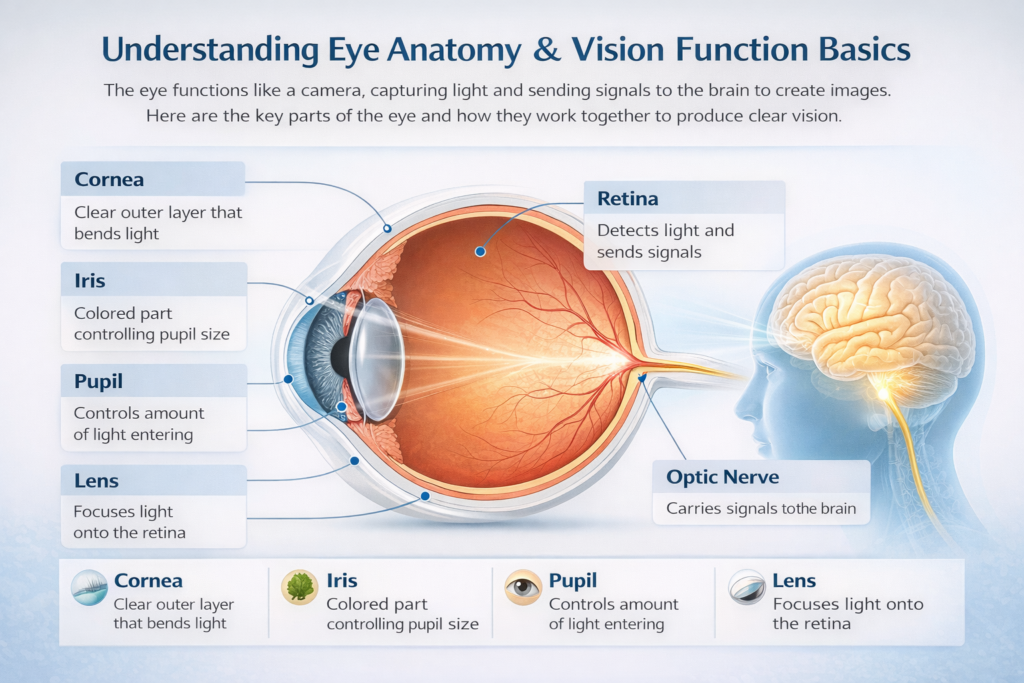
To understand how to improve eyesight naturally, it helps to know how the eyes work. The human eye functions like a camera, capturing light and sending signals to the brain to create images. Several key parts of the eye work together to produce clear vision.
The cornea is the clear outer layer that bends incoming light. Behind it, the pupil controls how much light enters the eye, while the iris (the colored part) adjusts the pupil’s size. The lens then focuses light onto the retina, a thin layer of tissue at the back of the eye that contains light-sensitive cells.
The retina converts light into electrical signals, which travel through the optic nerve to the brain. The brain processes these signals and forms the images we see. If any part of this system becomes strained or damaged, vision may become blurry or uncomfortable.
Healthy nutrition, proper circulation, and protective habits help keep these structures functioning efficiently.
Key Points About Eye Anatomy & Vision
- The eye works like a camera, capturing light and sending signals to the brain.
- The cornea and lens focus light onto the retina to create clear images.
- The iris controls how much light enters through the pupil.
- The retina contains light-sensitive cells that detect color and brightness.
- The optic nerve carries visual information from the eye to the brain.
- The brain processes these signals to form the images we see.
Essential Nutrients and Foods for Eye Health
Proper nutrition plays a crucial role in maintaining clear vision and protecting the eyes from long-term damage. The eyes rely on specific vitamins, minerals, and antioxidants to support retinal function, reduce inflammation, and prevent age-related decline. Including nutrient-rich foods in your daily diet can help strengthen eye tissues and maintain healthy vision.
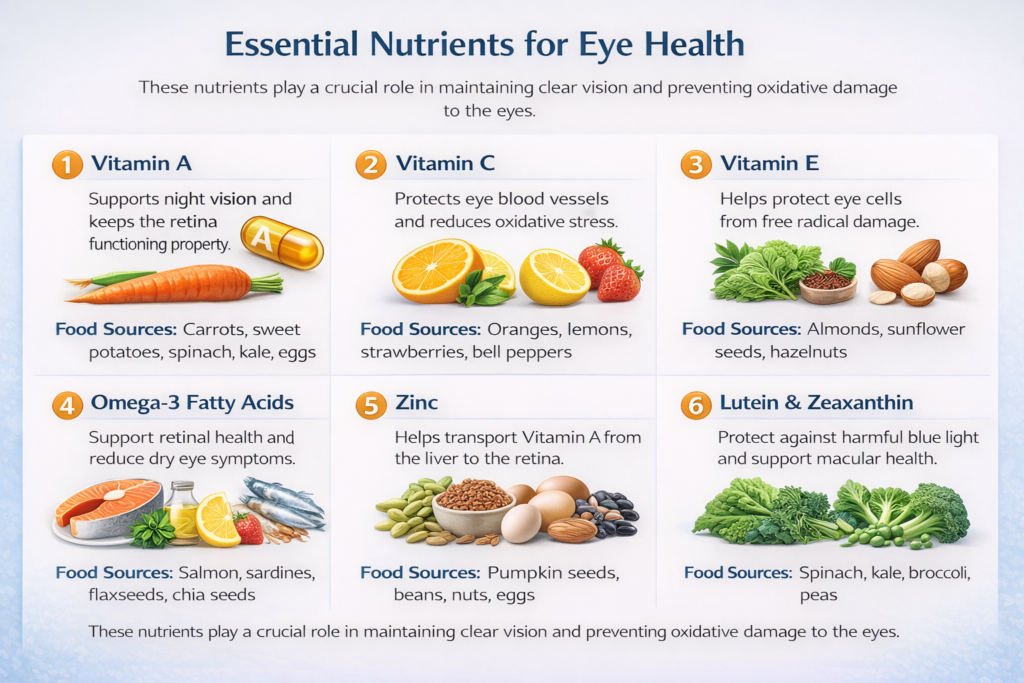
Below are the most important nutrients for eye health and the best food sources to obtain them naturally.
1. Vitamin A
Supports night vision and keeps the retina functioning properly. It plays a key role in maintaining the health of light-sensitive cells in the eyes.
A deficiency in Vitamin A can lead to dryness, poor night vision, and increased risk of eye infections. Maintaining adequate intake helps preserve overall visual clarity.
Food Sources: Carrots, sweet potatoes, spinach, kale, eggs.
2. Vitamin C
Protects eye blood vessels and reduces oxidative stress. It helps strengthen connective tissues in the eyes and supports long-term eye structure health.
Vitamin C may also lower the risk of cataracts and age-related vision decline by protecting against cellular damage.
Food Sources: Oranges, lemons, strawberries, bell peppers.
3. Vitamin E
Helps protect eye cells from free radical damage. It works as a powerful antioxidant that shields sensitive eye tissues.
Regular intake of Vitamin E may help slow age-related macular degeneration and support retinal stability.
Food Sources: Almonds, sunflower seeds, hazelnuts.
4. Omega-3 Fatty Acids
Support retinal health and reduce dry eye symptoms. They help maintain proper tear production and reduce inflammation.
Omega-3s also support healthy blood flow to the eyes, improving overall visual comfort and function.
Food Sources: Salmon, sardines, flaxseeds, chia seeds.
5. Zinc
Helps transport Vitamin A from the liver to the retina. It plays an important role in maintaining sharp vision.
Zinc also supports immune function in the eyes and may help reduce the progression of certain age-related eye conditions.
Food Sources: Pumpkin seeds, beans, nuts, eggs.
6. Lutein & Zeaxanthin
Protect against harmful blue light and support macular health. These antioxidants are concentrated in the retina.
They act as natural filters, reducing eye strain and lowering the risk of age-related macular degeneration.
Food Sources: Spinach, kale, broccoli, peas.
Lifestyle Habits Supporting Healthy Vision
Healthy eyesight is not maintained by nutrition alone. Daily lifestyle habits play a powerful role in protecting your eyes from strain, fatigue, and long-term damage. Modern routines, especially extended screen exposure and lack of rest, can weaken eye comfort over time. Adopting simple, consistent habits can significantly improve visual comfort and support long-term eye health.
Below are key lifestyle habits that help maintain clear and healthy vision.
1. Follow the 20-20-20 Rule
Every 20 minutes, look at something 20 feet away for at least 20 seconds. This reduces digital eye strain and relaxes eye muscles. Prolonged screen use forces your eyes to focus at one distance for long periods, which can lead to fatigue and dryness. Taking regular visual breaks helps reset focus and reduces tension in the eye muscles.
2. Get Quality Sleep
7–8 hours of sleep allows your eyes to repair, rehydrate, and recover from daily stress and exposure. During sleep, the eyes replenish moisture and remove irritants accumulated throughout the day. Inadequate sleep may cause redness, twitching, blurred vision, and increased sensitivity to light.
3. Stay Properly Hydrated
Adequate water intake supports tear production and prevents dryness or irritation. Tears are essential for keeping the eye surface smooth and clear. Dehydration can reduce tear quality, leading to discomfort, blurred vision, and a gritty sensation in the eyes.
4. Wear UV-Protective Sunglasses
Protect your eyes from harmful ultraviolet rays that can increase the risk of cataracts and retinal damage. Long-term UV exposure may also contribute to macular degeneration. Choosing sunglasses that block 100% of UVA and UVB rays provides better protection during outdoor activities.
5. Maintain Proper Screen Distance
Keep screens at arm’s length and slightly below eye level to reduce strain and improve posture. Sitting too close to screens increases eye fatigue and forces excessive focusing effort. Adjusting brightness and contrast settings can further reduce strain.
6. Blink Frequently
Blinking helps spread tears evenly across the eye surface, keeping them moist and comfortable. Many people blink less when using digital devices, which increases dryness and irritation. Conscious blinking helps maintain natural lubrication and visual clarity.
7. Maintain Good Lighting
Avoid working in very dim or overly bright environments that strain your eyes. Proper lighting reduces glare and prevents squinting. Position light sources to avoid reflections on screens and reading materials.
8. Avoid Smoking
Smoking increases oxidative stress and may raise the risk of serious eye conditions such as cataracts and macular degeneration. Chemicals in tobacco smoke can damage blood vessels in the eyes and accelerate age-related vision decline. Quitting smoking significantly supports long-term eye health.
Natural Eye Exercises and Techniques
Eye exercises are designed to strengthen focusing ability, improve coordination between eye muscles, and reduce visual fatigue. While they cannot permanently correct refractive errors like high myopia or astigmatism, they can significantly improve comfort, flexibility, and focus control especially for people who spend long hours on screens.
Practicing these exercises consistently may help relax overworked eye muscles and support better visual endurance.
1. Pencil Push-Up Exercise
Hold a pencil at arm’s length and slowly bring it toward your nose while keeping it in focus. Stop when it becomes blurry, then move it back again.
Repeat 10–15 times. This strengthens convergence (the ability of both eyes to work together).
2. Figure-8 Eye Tracking
Imagine a large number 8 (sideways infinity symbol) about 8–10 feet in front of you. Slowly trace the shape with your eyes for 30 seconds, then switch directions.
This improves eye coordination and smooth tracking movement.
3. Focus Expansion Exercise
Choose one object nearby and one object far away. Focus deeply on the near object for 15 seconds, then shift to the distant object for another 15 seconds.
This trains the eye’s focusing flexibility.
4. Diagonal Eye Movement
Look up to the top right corner, then slowly move your gaze to the bottom left. Repeat in the opposite direction.
This activates different eye muscle groups and improves range of motion.
5. Gentle Eye Massage
Close your eyes and gently massage the temples and eyebrow area using circular motions.
This increases blood circulation around the eye muscles and reduces tension.
6. Depth Awareness Practice
Place two objects at different distances in front of you. Alternate focus while noticing clarity and sharpness.
This enhances depth perception and muscle coordination.
Herbal and Home Remedies for Eye Care
Herbal and home remedies have been used traditionally to soothe eye discomfort, reduce mild irritation, and support overall eye wellness. While these remedies cannot cure serious eye conditions or replace medical treatment, they may help relieve dryness, strain, and temporary redness when used safely.
It is important to ensure cleanliness and avoid applying anything directly inside the eyes unless approved by a healthcare professional.
Below are commonly used natural remedies that may support eye comfort.
1. Cold Compress
Placing a clean, cold cloth over closed eyes can reduce puffiness, irritation, and mild inflammation. This helps relax eye muscles and soothe tired eyes after long screen use.
Cold therapy works by constricting blood vessels, which may reduce swelling and redness. It is especially helpful for eye fatigue caused by prolonged reading, digital exposure, or lack of sleep. Always use a clean cloth and avoid applying ice directly to the skin.
2. Cucumber Slices
Cucumber has cooling properties that may help reduce swelling and refresh tired eyes. Place chilled slices over closed eyelids for 10–15 minutes.
Cucumbers contain antioxidants and water content that can hydrate and calm the skin around the eyes. While they do not improve vision directly, they may reduce puffiness and provide temporary relief from eye strain.
3. Rose Water (External Use Only)
Pure, sterile rose water can be used on a cotton pad over closed eyes to soothe mild irritation. Avoid using non-sterile products directly inside the eyes.
Rose water may have mild soothing properties that help reduce dryness around the eyelids. Always ensure the product is preservative-free and labeled safe for cosmetic use to prevent irritation.
4. Chamomile Tea Compress
After steeping chamomile tea, allow the tea bags to cool and place them over closed eyes. Chamomile may help calm mild inflammation and redness.
Chamomile contains natural compounds that may have anti-inflammatory effects. However, individuals with allergies to plants in the daisy family should avoid using it to prevent allergic reactions.
5. Aloe Vera Gel (External Area Only)
Pure aloe vera gel applied gently around the eye area (not inside the eyes) may help reduce dryness and irritation of the surrounding skin.
Aloe vera has hydrating and soothing properties that may calm skin discomfort caused by dryness or environmental exposure. Always perform a patch test before applying to sensitive areas.
6. Warm Compress
A warm compress can help improve circulation around the eyes and may relieve mild dryness caused by blocked oil glands.
Warmth helps loosen debris and support natural oil flow in the eyelids, which contributes to tear stability. Use a clean, comfortably warm cloth and avoid excessive heat to prevent burns.
Environmental and Behavioral Modifications
Your surroundings and daily behaviors have a significant impact on eye health. Poor lighting, excessive screen exposure, dry air, and unhealthy routines can gradually increase eye strain and discomfort. Making small environmental and behavioral adjustments can help reduce stress on the eyes and support long-term visual comfort.
These modifications focus on prevention, helping protect your eyesight from unnecessary strain and damage.
1. Optimize Lighting Conditions
Ensure your workspace has balanced, soft lighting. Avoid harsh glare or working in very dim environments, as both can strain the eyes. Position light sources to prevent reflections on screens and reading materials.
Natural light is ideal when possible, but it should not shine directly into your eyes or onto your screen. Using adjustable desk lamps and anti-glare screen protectors can further reduce visual discomfort.
2. Adjust Screen Settings
Reduce brightness to match room lighting and increase text size for easier reading. Using blue-light filters or night mode can help reduce eye fatigue, especially during evening screen use.
Keeping screens clean from dust and fingerprints also improves clarity and reduces the need for squinting. Adjusting contrast levels may further enhance reading comfort.
3. Improve Air Quality
Dry air from air conditioners or heaters can worsen eye dryness. Using a humidifier and avoiding direct airflow toward your face helps maintain natural tear balance.
Spending time outdoors in fresh air and ensuring proper room ventilation can also support eye comfort. Clean indoor air reduces irritation caused by allergens and dust particles.
4. Maintain Proper Posture
Sit upright with your screen slightly below eye level and about an arm’s length away. Poor posture can increase neck tension and indirectly strain the eyes.
Keeping your feet flat on the floor and shoulders relaxed helps maintain a comfortable viewing position. Proper ergonomics reduce overall fatigue during long work sessions.
5. Take Regular Breaks
Avoid long periods of uninterrupted close work. Short breaks help relax eye muscles and improve focus flexibility.
Standing up, stretching, and briefly walking during breaks improves blood circulation, which benefits both eye and overall body health.
6. Reduce Exposure to Pollutants
Dust, smoke, and environmental pollution can irritate the eyes. Wearing protective eyewear in polluted or windy conditions may help prevent irritation.
Limiting exposure to cigarette smoke and maintaining a clean living space further protects sensitive eye tissues from inflammation.
7. Manage Stress Levels
Chronic stress can increase muscle tension around the eyes and reduce blood circulation. Relaxation techniques support overall visual comfort.
Practices such as deep breathing, meditation, and gentle stretching can help reduce tension headaches and eye fatigue associated with stress.
8. Practice Good Eye Hygiene
Avoid rubbing your eyes with unclean hands, and remove makeup properly before sleeping. Good hygiene reduces the risk of irritation and infection.
Replace eye cosmetics regularly and avoid sharing personal items like towels or contact lenses. Clean habits play an important role in preventing eye discomfort and maintaining healthy vision.
Common Myths and Misconceptions and Facts About Eye Health
There are many beliefs about eyesight that have been passed down for years. Some are partially true, while others are completely misleading. Understanding the difference between myths and facts can help you take better care of your eyes and avoid unnecessary fear or confusion.
Below are some of the most common eye health myths and the facts behind them.
Myth 1: Sitting Too Close to the TV Damages Your Eyes
Fact: Sitting close to screens does not permanently damage your eyesight. However, it may cause temporary eye strain or fatigue. Taking regular breaks helps reduce discomfort.
Myth 2: Eating Carrots Alone Will Fix Your Vision
Fact: Carrots support eye health because they contain Vitamin A, but they cannot correct refractive errors like nearsightedness or farsightedness. A balanced diet is more important than relying on one food.
Myth 3: Wearing Glasses Makes Your Eyes Weaker
Fact: Glasses do not weaken your eyes. They simply correct vision to help you see clearly. Not wearing prescribed glasses may actually increase strain and headaches.
Myth 4: Eye Exercises Can Cure All Vision Problems
Fact: Eye exercises can reduce strain and improve focusing flexibility, but they cannot permanently cure structural vision conditions such as high myopia or astigmatism.
Myth 5: Reading in Dim Light Causes Permanent Damage
Fact: Reading in low light may cause temporary strain and discomfort, but it does not permanently damage your eyesight.
Myth 6: Only Older Adults Need Eye Checkups
Fact: Eye problems can occur at any age. Regular eye examinations help detect issues early, even if you do not notice symptoms.
Myth 7: If You See Clearly, Your Eyes Are Healthy
Fact: Some serious eye conditions, such as glaucoma, may not show early symptoms. Regular checkups are essential for long-term eye health.
Understanding the facts about eye health allows you to make informed decisions and follow safe, effective habits for maintaining clear vision.
FAQs
1. Can eyesight really improve naturally?
Natural methods can reduce eye strain, improve visual comfort, and support long-term eye health. However, they cannot permanently correct severe refractive errors like high myopia or astigmatism.
2. How long does it take to see improvement?
Improvements in eye comfort and reduced strain may be noticed within a few weeks of consistent healthy habits. Structural vision changes typically require medical treatment.
3. Which foods are best for eye health?
Foods rich in Vitamin A, C, E, omega-3 fatty acids, zinc, lutein, and zeaxanthin support eye health. Examples include leafy greens, carrots, fatty fish, nuts, and citrus fruits.
4. Do eye exercises actually work?
Eye exercises can help reduce strain and improve focus flexibility. They are especially helpful for people who spend long hours on screens but do not cure major vision conditions.
5. Is screen time permanently damaging my eyes?
Excessive screen time mainly causes temporary digital eye strain. Taking regular breaks and adjusting screen settings can reduce discomfort.
6. How often should I get my eyes checked?
Most adults should have a comprehensive eye exam every 1–2 years. Individuals with existing conditions may require more frequent checkups.
7. Are herbal remedies safe for eyes?
Some natural remedies may soothe mild irritation, but they should be used cautiously. Avoid placing unsterilized substances inside the eyes and consult a professional for persistent symptoms.
8. Can dehydration affect eyesight?
Yes, dehydration can reduce tear production, leading to dryness, irritation, and temporary blurred vision.
Conclusion
Improving eyesight naturally requires a combination of proper nutrition, eye exercises, protective habits, and healthy environmental choices. While natural methods may not permanently correct serious vision conditions, they can significantly reduce eye strain, improve visual comfort, and support long-term eye health. Simple daily practices such as eating nutrient-rich foods, limiting screen exposure, staying hydrated, and protecting your eyes from UV damage can make a meaningful difference over time.
Consistency is key. Small, sustainable changes in lifestyle and behavior help strengthen and protect your vision as you age. Regular eye checkups remain essential for early detection of potential problems. By taking proactive steps today, you can maintain clearer, healthier eyesight for the future.
References
1. National Eye Institute (NEI) – National Institutes of Health Comprehensive information on eye anatomy, nutrition, and common eye conditions. https://www.nei.nih.gov
2. American Academy of Ophthalmology (AAO) Evidence-based guidance on eye health, nutrition, digital eye strain, and UV protection.
https://www.aao.org/eye-health
3. Mayo Clinic – Eye Health & Vision Care Medical information about eye conditions, nutrition, and lifestyle habits.
Allergies and asthma: They often occur together – Mayo Clinic
4. National Eye Institute – AREDS Study (Age-Related Eye Disease Study) Research on vitamins (A, C, E, zinc, lutein) and their role in eye health.
Age-Related Eye Disease Studies (AREDS/AREDS2) | National Eye Institute
5. Harvard Health Publishing – Nutrition and Eye Health Explains the role of antioxidants, omega-3s, and lutein in vision protection.
Staying Healthy – Harvard Health
6. World Health Organization (WHO) – Vision & Eye Care Global data and recommendations on preventing vision impairment.
https://www.who.int/health-topics/blindness-and-vision-loss
7. PubMed – Lutein and Zeaxanthin in Eye Health (Review Study) Scientific review on macular protection and antioxidant benefits.
https://pubmed.ncbi.nlm.nih.gov/25180068/
8. National Center for Biotechnology Information (NCBI) – Omega-3 & Dry Eye Research on omega-3 fatty acids and eye surface health.
From Disease To Health: Physical Therapy Health Promotion Practices for Secondary Prevention in Adult and Pediatric Neurologic Populations – PMC