
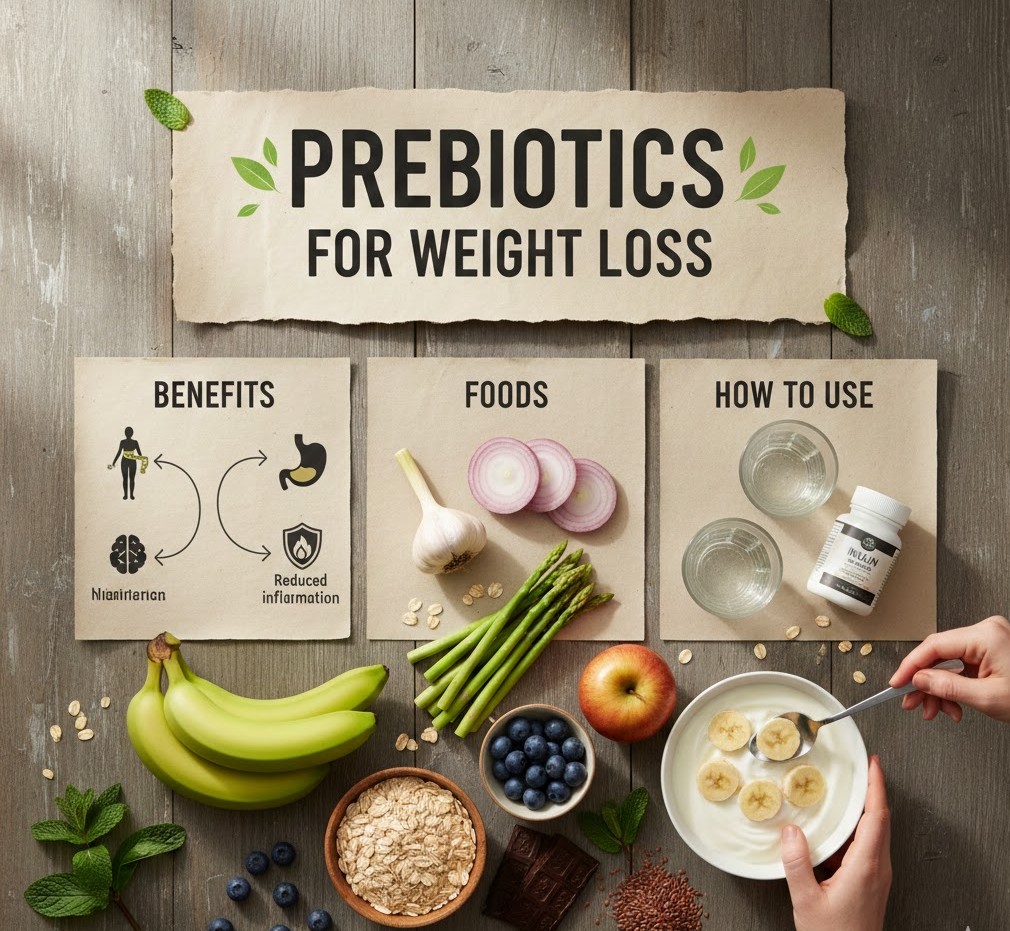
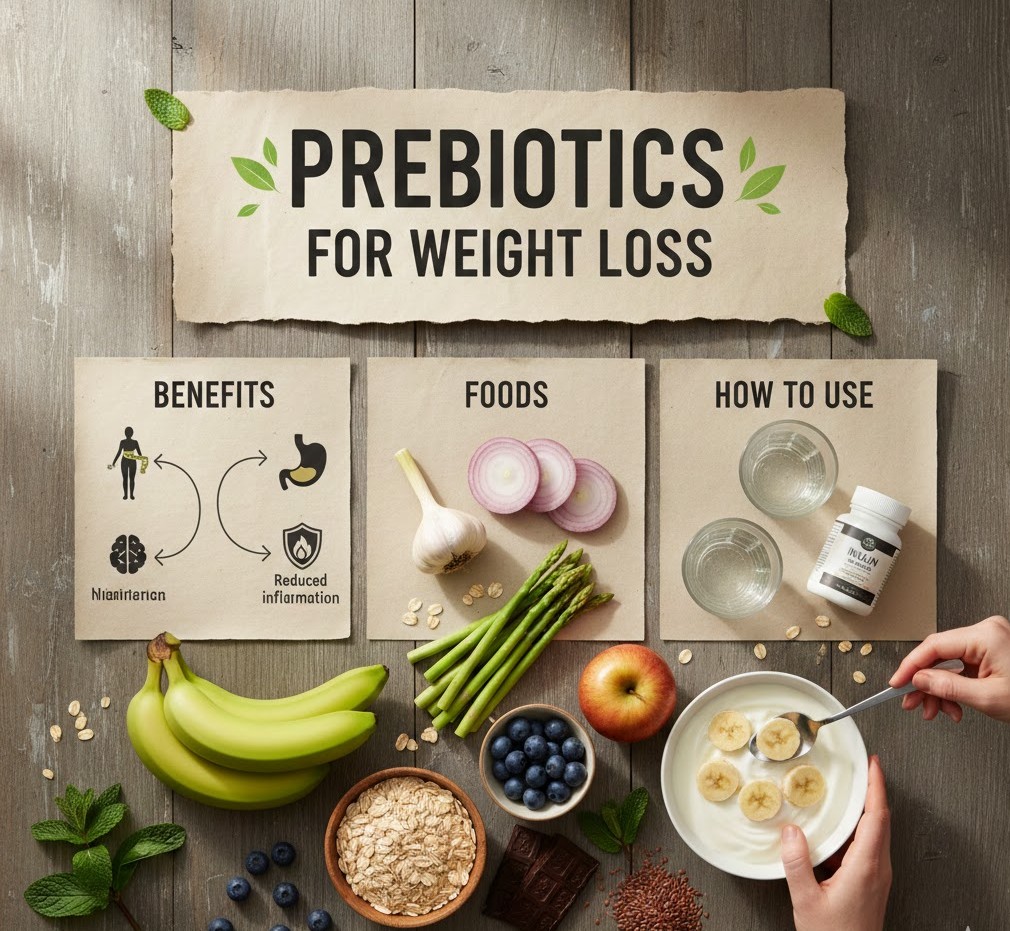
Prebiotics for weight loss aren’t a quick fix or a supplement-only approach; they’re a practical way to support appetite control and steadier digestion by feeding healthy gut bacteria. Because prebiotic-rich foods add the right kind of fiber, they help meals digest more slowly and can increase feelings of fullness, which may reduce cravings, automatic snacking, and energy dips that derail weight loss. The most effective strategy is simple and sustainable: add prebiotic foods gradually, build tolerance over time, and focus on repeatable daily habits rather than chasing a perfect diet.
Key Takeaways
- Prebiotics are specific fibers your body doesn’t digest that feed beneficial gut bacteria.
- Resistant starch (green bananas, oats, boiled and chilled potatoes/rice) and inulin (garlic/onion) are common prebiotic types.
- Increasing prebiotics too fast is the most common reason people feel bloated and quit early, so gradual increases matter.
- Whole food prebiotics usually work better long term than starting with high dose supplements.
- For best results, combine prebiotics with protein, hydration, and consistent meal timing.
What Are Prebiotics?
Prebiotics are non digestible fibers (and fiber-like compounds) found in plant foods. Your body doesn’t fully break them down in the small intestine. Instead, they reach the large intestine, where certain gut bacteria use them as fuel. This feeding process supports the growth and activity of beneficial bacteria and leads to the production of helpful compounds during fermentation.
Common Types of Prebiotics
Common types of prebiotics work in slightly different ways, but all support beneficial gut bacteria and digestive balance. Including a variety such as resistant starch, inulin, and soluble fibers helps create stronger, more consistent appetite and digestion support over time.
1) Resistant starch: Resistant starch acts like fiber because it “resists” digestion in the small intestine and ferments in the large intestine. Cleveland Clinic notes resistant starch can be found in foods like green bananas, barley, oats, rice, beans/legumes, and boiled-and-chilled potatoes.
2) Inulin: Inulin is a prebiotic fiber found in plants such as onions and garlic. Cleveland Clinic notes inulin may help you feel full for longer and can support gut bacteria balance.
3) Pectin and other soluble fibers: Pectin is common in fruits like apples and contributes to a gut-friendly fiber mix. It’s not about one fiber doing everything; it’s about steady intake across the week.
Prebiotics for Weight Loss Benefits You Can Feel in Everyday Life
Prebiotics do not automatically cause weight loss. Instead, they support digestion and appetite patterns that can make weight loss easier to maintain. Many people notice benefits first as “fewer messy appetite days,” not as a dramatic overnight change.
1) Fullness and appetite control
Prebiotic-rich foods often increase meal volume and slow digestion. Inulin is specifically noted for helping some people feel full longer, which can reduce overeating and constant snacking.
- You stay satisfied longer after meals
- You feel less urgent hunger between meals
- Portions feel easier to manage without forcing it
2) Cravings feel less reactive
Many cravings happen when meals digest too quickly, energy dips, and hunger spikes. Prebiotic foods typically come with fiber and resistant starch, which support slower digestion. That slower digestion often means fewer “I need something now” cravings.
- Less afternoon snack urgency
- Fewer sugar cravings after a low-fiber lunch
- More predictable hunger timing
3) More consistent digestion supports better adherence
Weight loss routines often break when digestion feels unpredictable. If you’re bloated, constipated, or dealing with stomach discomfort, you’re less likely to prepare food, eat balanced meals, and maintain consistency. Prebiotics can support more regular digestion over time when added slowly and paired with hydration.
4) Better meal quality without extreme restriction
One reason prebiotics can help weight goals is that they naturally pull you toward higher quality foods: oats, legumes, fruit, vegetables, whole grains. Those foods tend to be more filling per calorie, easier to portion, and better for long-term consistency.
How to Use Prebiotics for Weight Loss With Realistic Daily Habits
If you want this to work long-term, focus on routine. Most people fail with prebiotics because they start too aggressively, feel bloated, and assume their body “can’t tolerate fiber.” Usually the fix is slower increases and smaller portions.
a) Start with one prebiotic food (then build)
Pick one daily staple and keep it consistent for a week:
- Oats at breakfast
- Lentils or chickpeas at lunch
- Garlic/onion cooked into dinner
b) Increase slowly to reduce gas and bloating
Prebiotic fibers are fermented by gut bacteria, so a sudden increase can cause gas and discomfort. Start with one small serving per day and keep it consistent for a few days so your digestion can adapt. Once you feel comfortable, increase the portion gradually or add a second prebiotic food a few times per week. If bloating shows up, reduce the portion and choose cooked, gentler options until symptoms settle. Then build up again slowly, because steady progress works better than fast jumps.
c) Hydration habits that make fiber feel better
Fiber works better when you drink enough water. If you increase prebiotics without hydration, constipation and discomfort are more likely.
- One glass of water within an hour of waking
- Water with lunch
- Water mid-afternoon
- Include watery foods (soups, fruit, yogurt, cucumbers)
d) Protein + prebiotics: the simplest fat-loss meal upgrade
Prebiotics support fullness, but protein is still the anchor for appetite control. Pairing prebiotics with protein reduces rebound hunger and helps meals stay satisfying.
- Oats + Greek yogurt
- Lentils + chicken/fish/tofu
- Chickpea bowl + eggs
- Apple + yogurt or nut butter
e) Meal timing that reduces overeating
Skipping meals and then eating a large dinner often increases cravings and heaviness. A steadier meal rhythm makes prebiotic foods easier to tolerate, too.
- keep lunch within a consistent 2-hour window most weekdays
- avoid huge late night meals if they trigger heaviness
- slow down when eating high-fiber meals (rushing increases discomfort)
f) Cooking method matters for resistant starch
Cleveland Clinic explains that boiled and chilled potatoes form the resistant starch you want; preparation changes the amount present.
- Boil potatoes, cool them, then use in salads or bowls
- cook rice, cool it, use it for meal prep
g) Start here this week (simple checklist)
- Add one prebiotic food daily and keep portions modest
- Pair that food with protein once per day
- Drink water earlier in the day, not only at night
- Try one resistant starch prep (cooled potatoes or cooled rice)
- Walk 10 minutes after one meal most days
Foods High in Prebiotics
Foods high in prebiotics are not “magic foods.” They work because they support gut bacteria and make meals digest more slowly. Cleveland Clinic lists several resistant starch sources (green bananas, barley, oats, rice, legumes, boiled-and-chilled potatoes).
| Food | What it supports | Easy way to eat it |
| Oats | gentle fiber + steady fullness | oatmeal or overnight oats |
| Green bananas (slightly unripe) | resistant starch support | slice into oats or smoothies |
| Barley | resistant starch + fiber | soups or grain bowls |
| Rice (cooked then cooled) | resistant starch | meal prep bowls |
| Potatoes (boiled then chilled) | resistant starch | potato salad or bowls |
| Garlic | inulin support | cook into most meals |
| Onions/leeks | inulin support | soups, eggs, stir-fries |
| Lentils | fiber + plant protein | dal, soup, bowls |
| Chickpeas/beans | fiber + resistant starch | hummus, salads, bowls |
| Apples | pectin + fiber | snack with protein |
| Asparagus | inulin support | roast as a side |
| Nuts + seeds | fiber + fats for satiety | add to yogurt/oats |
How to Get Better Results From Prebiotics for Weight Loss
Prebiotics work best when your daily routine supports stable digestion and stable appetite. If you add prebiotic foods but your meals are inconsistent, highly processed, or rushed, you may notice more cravings and less benefit. The goal is not perfection, it’s creating conditions where prebiotic fiber can actually do its job: improve satiety, support regular digestion, and reduce reactive hunger.
Build plant variety (without making it complicated)
Different prebiotic fibers feed different bacteria, so variety across the week is more useful than relying on one food every day. You don’t need a strict target, just rotate a few staples so your gut gets different inputs.
- rotate vegetables (greens one day, carrots next, broccoli next)
- rotate legumes (lentils, chickpeas, beans)
- rotate grains (oats, barley, whole wheat, rice)
- use herbs and spices often (they count as plant variety)
Use fermented foods as a “small add-on,” not a main strategy
Fermented foods can complement prebiotic intake because they add live cultures, but they can also trigger bloating if you introduce too much too fast, especially when you’re already increasing fiber. Treat them like a small optional tool.
- 2–3 spoonfuls of yogurt or kefir
- small side serving of kimchi or sauerkraut
- increase only if digestion stays comfortable
Reduce the habits that cancel prebiotic benefits
Prebiotics help most when your baseline diet and routine aren’t constantly disrupting digestion. If your week is mostly low fiber, late heavy dinners, and ultra-processed meals, the gut becomes more reactive and cravings tend to rise.
- very low fiber for long periods, then sudden large fiber jumps
- frequent ultra processed meals with low plant variety
- inconsistent sleep and high stress without recovery
- heavy late-night meals most nights
Common Mistakes That Slow Progress
Prebiotics can support weight loss, but progress often slows when they’re added without structure. Most setbacks happen from increasing fiber too quickly, building unbalanced meals, or expecting rapid results instead of steady improvement.
- Increasing prebiotics too fast: Fermentable fibers can cause gas and bloating when intake jumps suddenly. Start with small portions and increase every few days.
- Doing too many changes at once: Changing fiber, supplements, workouts, and meal timing together makes it hard to identify triggers and harder to stay consistent. Add one or two changes per week.
- Relying on supplements instead of food: Supplements are easy to overdo and may cause discomfort. Whole-food prebiotics are easier to scale gradually and improve overall meal quality.
- Ignoring protein and meal structure: If meals are high in fiber but low in protein, hunger rebounds fast. Pair prebiotic foods with protein to improve satiety.
- Expecting fast weight loss: Prebiotics support appetite control and routine consistency over time. Progress often shows up first as fewer cravings and steadier eating patterns, not immediate scale changes.
7-day starter plan (not a detox)
This plan builds tolerance gradually. Repeat it for 2–4 weeks if it feels good.
| Day | Focus | Simple action |
| Day 1 | Fiber base | add oats at breakfast |
| Day 2 | Inulin support | cook with garlic/onion |
| Day 3 | Resistant starch | add a slightly green banana |
| Day 4 | Legume support | add a small serving of lentils |
| Day 5 | Prep method | try cooled potatoes or cooled rice |
| Day 6 | Movement | 10-minute walk after one meal |
| Day 7 | Plant variety | add two different vegetables |
Frequently Asked Questions(FAQ)
How long does it take to notice benefits from prebiotics?
Some people notice digestion or appetite changes within 1–2 weeks, especially if hydration and meal structure improve. Bigger routine changes often take several weeks because your gut adapts gradually.
What’s the best prebiotic for weight loss?
The best prebiotic is the one you can eat consistently without discomfort. For many people, oats, lentils, garlic/onion, and resistant starch foods (green bananas, cooled potatoes/rice) are practical starting points.
Why do prebiotics cause gas?
Gut bacteria ferment prebiotic fibers, and fermentation can produce gas especially when fiber intake rises quickly. Start small, increase slowly, and use cooked versions early on.
Are prebiotic supplements necessary?
Not necessarily. Many people benefit from food. If you use supplements, start with a low dose and increase gradually because it’s easy to take too much too soon.
Can I use prebiotics if I have IBS or I’m sensitive to fiber?
Some people with IBS or FODMAP sensitivity react to inulin-rich foods (garlic/onion). If you’re sensitive, start with gentler options like oats and small portions of lentils, and increase slowly. If symptoms are severe or persistent, consult a professional.
When should I talk to a professional?
You should seek medical guidance if digestive symptoms are severe, persistent, or worsening, or if you notice red flags such as blood in the stool, unexplained weight loss, ongoing abdominal pain, or significant changes in bowel habits. If bloating, discomfort, or food reactions regularly disrupt your daily life, a healthcare professional can help identify underlying causes and guide a personalized plan.
Conclusion
Prebiotics for weight loss are most useful because they support fullness, steadier appetite patterns, and better digestion consistency by feeding healthy gut bacteria. If you want results you can maintain, focus on the basics: add one prebiotic food, increase slowly, pair it with protein, hydrate earlier in the day, and support digestion with light movement. Over time, these small habits can reduce cravings and make weight loss routines feel easier to stick with.
References
- Cleveland Clinic – What Are Prebiotics? (Resistant starch, inulin, food sources)
https://health.clevelandclinic.org/what-are-prebiotics - Mayo Clinic – Probiotics and Prebiotics: What’s the Difference?
https://www.mayoclinic.org/healthy-lifestyle/consumer-health/expert-answers/probiotics/faq-20058065 - Mayo Clinic News Network – What Are Prebiotics and Probiotics?
https://newsnetwork.mayoclinic.org/discussion/mayo-clinic-qa-what-are-prebiotics-and-probiotics/ - Stanford Medicine – Fermented Foods Increase Microbiome Diversity
https://med.stanford.edu/news/all-news/2021/07/fermented-food-diet-increases-microbiome-diversity-lowers-inflammation.html - PubMed – Inulin Supplementation and Weight Maintenance Study
https://pubmed.ncbi.nlm.nih.gov/26500686/