


Brain fog is not a random mental issue; it is often the result of underlying imbalances within the body, especially poor gut health, inflammation, stress, and lifestyle habits. Brain fog remedies focus on improving mental clarity, focus, energy, and cognitive performance by addressing these root causes. Understanding brain fog remedies helps you recognize how digestion, immunity, mood, sleep, and daily habits directly affect brain function. Diet, stress levels, sleep quality, and physical activity strongly influence mental sharpness, making brain fog prevention a key part of a healthy lifestyle.
Key Takeaways
- Understanding brain fog remedies helps improve focus, memory, and overall cognitive wellness.
- A healthy gut microbiome supports mental clarity and reduces brain fog through the gut-brain axis.
- Signals from the gut influence brain function through the vagus nerve, hormones, and immune pathways.
- Consuming nutrient-dense, probiotic-rich, and anti-inflammatory foods helps reduce brain fog symptoms.
- Lifestyle habits like quality sleep, stress management, hydration, and regular exercise improve brain performance.
- Supporting gut and brain health can lower inflammation, improve digestion, and enhance mental energy.
- Gradual dietary changes and mindful habits maximize brain fog relief while preventing discomfort.
What Is Brain Fog ?
Brain fog is a common condition that affects clarity of thought, focus, and memory. People experiencing it often feel mentally sluggish, forgetful, or unable to concentrate on tasks. It is not a medical diagnosis but a symptom that can result from stress, poor sleep, nutrient deficiencies, or chronic health issues.

Brain fog may also be linked to inflammation, hormonal imbalances, or gut health disruptions. Common signs include difficulty recalling information, confusion, low motivation, and mental fatigue. While temporary brain fog can occur after a poor night’s sleep or stress, chronic brain fog can significantly impact daily life. Addressing underlying causes through diet, lifestyle, and supplements can help restore mental clarity and improve cognitive function.
Key Components of Brain Fog Remedies
Brain fog remedies work by targeting the core systems that influence mental clarity, focus, memory, and energy. Brain fog is not caused by a single issue; it develops when multiple factors disrupt normal brain function. Addressing these components together helps restore clear thinking and cognitive performance. The most effective brain fog remedies focus on the following key areas:
1. Stable Blood Sugar and Nutrition
The brain relies on a steady supply of glucose and nutrients. Skipping meals, eating excess sugar, or relying on processed foods can cause energy crashes and mental confusion. Balanced meals with protein, healthy fats, and complex carbohydrates help maintain consistent brain energy and reduce foggy thinking.
2. Gut Health and Digestion
An unhealthy gut can trigger inflammation and poor nutrient absorption, both of which worsen brain fog. Supporting gut health with fiber-rich foods, probiotics, and proper digestion helps improve mental clarity through the gut-brain connection.
3. Inflammation Control
Chronic inflammation interferes with brain signaling and slows cognitive processing. Anti-inflammatory foods, hydration, and lifestyle changes help calm inflammation and support sharper thinking.
4. Sleep Quality and Recovery
Sleep is essential for brain repair, memory consolidation, and toxin removal. Poor sleep directly increases brain fog, slow thinking, and poor focus. Consistent sleep routines are a core brain fog remedy.
5. Stress and Nervous System Balance
Long-term stress disrupts hormones and brain signaling, causing mental fatigue and poor focus. High cortisol can worsen brain fog. Managing stress through mindfulness, deep breathing, or light exercise improves cognitive function. Consistent stress control is a key remedy for clearer thinking.
How the Brain Fog Remedies Works?

Brain fog remedies restore mental clarity by targeting key causes. Balanced nutrition fuels the brain, while gut health support reduces inflammation and improves signaling. Quality sleep allows brain repair, and stress management lowers cortisol for better focus. Exercise, hydration, and supplements like omega-3s and B vitamins enhance cognitive function. Together, these strategies improve focus, memory, and energy, helping reduce and prevent brain fog which includes:
- Balanced Nutrition: Provides the brain with steady energy and essential nutrients needed for clear thinking. Eating protein, healthy fats, and complex carbohydrates helps prevent energy crashes and mental fatigue. Consistently fueling the brain supports focus, memory, and overall cognitive function.
- Gut Health Support: A healthy gut helps reduce inflammation that can interfere with brain function. Beneficial gut bacteria improve neurotransmitter signaling, which supports mood, focus, and mental clarity. Eating fiber-rich and probiotic foods strengthens gut health and enhances overall cognitive performance.
- Inflammation Reduction: Anti-inflammatory foods and healthy lifestyle habits help calm chronic inflammation in the body. This supports sharper thinking, reduces mental fatigue, and prevents cognitive slowing.
- Sleep Quality: Proper rest allows the brain to repair, consolidate memories, and clear toxins that accumulate during the day. Consistently getting quality sleep improves focus, mental clarity, and overall cognitive function.
- Stress Management: Reduces cortisol levels, helping the brain maintain clear thinking and sharp focus. Regular stress control also supports emotional balance, mental energy, and long-term cognitive health.
- Exercise and Hydration: Regular physical activity improves blood flow and oxygen delivery to the brain, while proper hydration supports neurotransmitter balance. Together, they enhance focus, memory, and overall mental performance.
- Supplement Support: Key nutrients like omega-3s, B vitamins, magnesium, and probiotics strengthen brain function. Supplements support cognition, reduce fatigue, and help maintain mental clarity when diet alone isn’t enough.
Common Factors That Disrupt the Brain Fog Remedies Axis
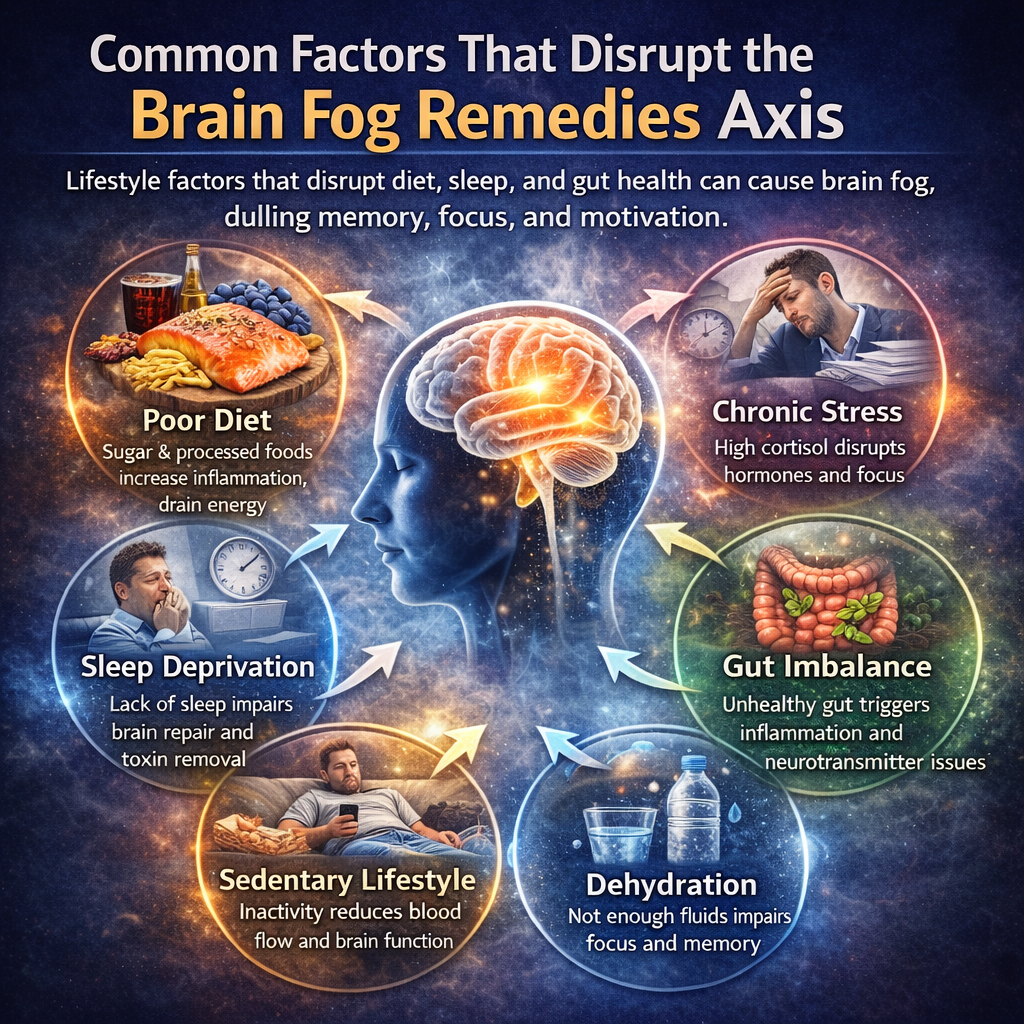
The Brain Fog Remedies Axis refers to the combination of lifestyle, diet, sleep, and gut health that keeps your brain functioning clearly. When any of these systems are disrupted, mental clarity suffers, leading to fatigue, poor focus, memory lapses, and low motivation. Common disruptors include poor nutrition, chronic stress, lack of sleep, gut imbalances, inactivity, and dehydration.
- Poor Diet: Consuming highly processed foods, excess sugar, or nutrient-poor meals increases inflammation and deprives the brain of steady energy, contributing to mental fatigue.
- Chronic Stress: Long-term stress raises cortisol levels, which interferes with hormone balance, neurotransmitter signaling, and focus.
- Sleep Deprivation: Insufficient or low-quality sleep prevents the brain from repairing, consolidating memories, and clearing toxins, worsening cognitive clarity.
- Gut Imbalance: An unhealthy gut microbiome can trigger inflammation and weaken neurotransmitter production, affecting mood, focus, and memory.
- Sedentary Lifestyle: Lack of physical activity reduces blood flow and oxygen delivery to the brain, slowing cognitive function and mental energy.
- Dehydration: Even mild fluid loss impairs concentration, short-term memory, and overall mental performance, increasing brain fog.
Top 7 Foods That Support Brain Fog Remedies Axis
The foods you eat directly impact brain function, energy, and mental clarity. A diet rich in anti-inflammatory, nutrient-dense, and gut-supporting foods strengthens the gut-brain axis by reducing inflammation, improving neurotransmitter signaling, and supporting cognitive performance. Consistently including these foods helps prevent mental fatigue, enhances focus, and promotes overall brain health, making them essential for anyone looking to clear brain fog naturally.
| Food Category | Examples | Key Nutrients | Brain Benefits |
| Fatty Fish | Salmon, sardines, mackerel | Omega-3 fatty acids (EPA & DHA) | Reduce brain inflammation, enhance memory, improve mood and focus, protect neurons from age-related decline, and support cardiovascular health linked to brain function. |
| Leafy Greens | Spinach, kale, Swiss chard | Folate, vitamin K, antioxidants | Protect neurons, reduce oxidative stress, support neurotransmitter production, improve cognitive performance, and slow cognitive aging. |
| Blueberries | Fresh or frozen blueberries | Flavonoids, antioxidants | Fight inflammation and oxidative stress, enhance communication between brain cells, improve memory, support neuroplasticity, and protect against cognitive decline. |
| Eggs | Whole eggs | Choline, B vitamins, high-quality protein | Support acetylcholine production for memory and learning, improve energy metabolism, enhance neurotransmitter function, and boost focus. |
| Fermented Foods | Yogurt, kefir, sauerkraut, kimchi | Probiotics, beneficial bacteria | Strengthen the gut microbiome, improve gut-brain communication, support serotonin and GABA production, reduce inflammation, and enhance mood stability. |
| Nuts & Seeds | Almonds, walnuts, flaxseeds, chia seeds | Healthy fats, vitamin E, antioxidants | Protect brain cells, combat oxidative stress, improve memory and attention, and reduce mental fatigue. |
| Whole Grains | Oats, quinoa, brown rice | Complex carbohydrates, fiber, B vitamins | Provide steady glucose for brain energy, reduce mental fatigue, regulate mood, and support sustained concentration and alertness. |
Lifestyle Habits That Strengthen the Brain Fog Remedies
Daily routines and lifestyle choices have a major impact on mental clarity and overall brain function. Consistently supporting gut health, reducing inflammation, and improving neurotransmitter signaling helps keep your mind sharp. Habits like quality sleep, stress management, exercise, hydration, and mindful eating are essential for preventing mental fatigue and boosting focus.
Key Habits:
- Prioritize Quality Sleep :Adequate rest allows the brain to repair, consolidate memories, and remove toxins that contribute to mental fatigue. Good sleep routines also improve mood, energy, and cognitive performance throughout the day.
- Manage Stress Effectively :Practices like meditation, deep breathing, and yoga reduce cortisol levels, supporting focus, emotional balance, and mental clarity. Regular stress control protects the brain from fatigue and burnout.
- Regular Physical Activity :Exercise improves blood flow and oxygen delivery to the brain, boosts neurotransmitter function, and reduces inflammation. Gentle or moderate activity strengthens both body and mind.
- Stay Hydrated :Proper hydration supports nutrient delivery, toxin removal, and optimal brain signaling. Drinking enough water throughout the day prevents sluggishness and improves concentration.
- Mindful Eating Habits :Eating slowly, chewing well, and focusing on meals improves digestion and gut-brain signaling. Mindful eating helps regulate appetite and supports sustained mental clarity.
- Limit Toxins and Stimulants :Reducing alcohol, processed foods, and excessive caffeine prevents inflammation and chemical imbalances. Avoiding these supports stable energy, focus, and overall brain health.
Conclusion
Brain fog can disrupt daily life, making focus, memory, and decision-making a constant challenge. By supporting the Brain Fog Remedies Axis through nutrient-rich foods, targeted supplements, and healthy lifestyle habits, you can reduce mental fatigue and restore cognitive clarity. Prioritizing gut health, balanced nutrition, quality sleep, stress management, and regular exercise creates a strong foundation for lasting brain function. Small, consistent changes compound over time, helping you think sharper, stay energized, and maintain emotional balance. Start incorporating these strategies today to strengthen your brain, improve focus, and reclaim mental clarity naturally.
FAQs
1. What are brain fog remedies?
Brain fog remedies are strategies including foods, supplements, and lifestyle habits that help improve focus, memory, and mental clarity. They target the root causes of cognitive fatigue, such as poor gut health, inflammation, and nutrient deficiencies.
2. How do foods help reduce brain fog?
Certain foods like fatty fish, leafy greens, blueberries, eggs, and fermented foods provide essential nutrients and antioxidants. These improve neurotransmitter function, reduce inflammation, support the gut-brain axis, and enhance cognitive performance.
3. Which supplements are best for brain fog?
Omega-3s, B vitamins, magnesium, probiotics, and Lion’s Mane mushrooms are commonly recommended. They help reduce neuroinflammation, support neurotransmitter production, and improve focus and mental energy.
4. How does lifestyle affect brain fog?
Sleep quality, stress management, hydration, exercise, and mindful eating all play a crucial role. Proper habits improve gut-brain signaling, regulate hormones, and boost cognitive function.
5. Can gut health really affect brain fog?
Yes, the gut and brain communicate through the gut-brain axis. A healthy gut microbiome improves neurotransmitter signaling, reduces inflammation, and enhances mood, memory, and focus.
6. How long does it take to notice improvements?
Improvements vary depending on individual lifestyle, diet, and underlying health conditions. With consistent dietary, supplement, and lifestyle changes, many people notice better focus and mental clarity within a few weeks.
7. Are these remedies safe for everyone?
Most foods and lifestyle habits are safe for the general population. However, always consult a healthcare professional before starting supplements, especially if you have chronic health conditions or are on medication.
References
- Gómez-Pinilla, F. (2008). Brain foods: the effects of nutrients on brain function. Nature Reviews Neuroscience.
Link: https://www.nature.com/articles/nrn2421
- West, R., & Muir, J. (2020). Omega-3 fatty acids and cognitive function. Alzheimer’s & Dementia: Translational Research & Clinical Interventions.
- Institute of Medicine (US) Committee on Sleep Medicine and Research. (2006). Sleep Disorders and Sleep Deprivation: An Unmet Public Health Problem.
Link: https://www.ncbi.nlm.nih.gov/books/NBK19961/
- Harvard Health Publishing. (2022). Foods Linked to Better Brainpower. Harvard Medical School.
Link: https://www.health.harvard.edu/mind-and-mood/foods-linked-to-better-brainpower
- National Center for Complementary and Integrative Health (NCCIH). (2023). Probiotics: What You Need to Know.
Link: https://www.nccih.nih.gov/health/probiotics-what-you-need-to-know
- Psaltopoulou, T., et al. (2013). Mediterranean diet and cognitive decline. Annals of Neurology.
Link: Intrinsic connectivity network disruption in progressive supranuclear palsy – Gardner – 2013 – Annals of Neurology – Wiley Online Library