Coleus forskohlii Root Extract: Uses, Benefits and Side Effects
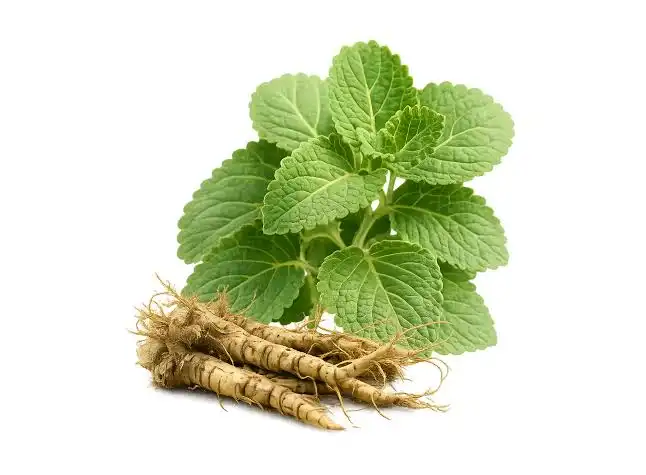
Coleus forskohlii is a medicinal plant from the mint family, traditionally used in Ayurvedic medicine for respiratory and cardiovascular concerns. Its root contains forskolin, a compound that activates adenylyl cyclase and increases cAMP, an important cellular messenger. The root is the main part used in herbal preparations. Today, research mainly explores its potential effects on body composition, metabolism, and cellular function.
What Is Coleus forskohlii Root Extract?
Coleus forskohlii root extract is a concentrated preparation made from the roots of the plant. During extraction, some of the naturally occurring compounds in the root are concentrated, especially forskolin. This is different from simply using dried Coleus forskohlii root powder. An extract can be standardized to a specific percentage of forskolin, such as 10%, which gives manufacturers a way to state the approximate amount of the target compound in the product. The strength of an extract depends on the raw material, extraction method, and standardization. Therefore, two products labeled as Coleus forskohlii extract can contain different amounts of forskolin.
Why Is Coleus forskohlii Famous?
Coleus forskohlii became particularly well known because its roots contain forskolin. Unlike many plant compounds, forskolin directly activates adenylyl cyclase rather than working indirectly through a receptor. This increases cAMP, an important signaling molecule involved in several processes in the body. This unusual biological action has made forskolin useful in laboratory research and has also led to interest in Coleus forskohlii as a dietary supplement. The plant is especially popular in supplements marketed for weight management, body composition, and metabolic support. However, scientific interest in a biological mechanism does not automatically mean that taking the plant extract produces the same effect in humans.
Where Is Coleus forskohlii Found and What Are Its Other Names?
Coleus forskohlii has strong traditional and medicinal connections with India and South Asia. It is also cultivated in other warm regions. Forskolin is not another name for the whole plant. It’s a natural compound found mainly in roots. The plant is known by several botanical and common names, including:
- Plectranthus barbatus
- Coleus barbatus
- Plectranthus forskohlii
- Indian coleus
- Makandi
- Forskolin plant
What Is Coleus forskohlii Used For?
Coleus forskohlii root extract is used mainly in dietary supplements, particularly those focused on weight management and body composition.Common areas of use and research include:
Weight Management
Weight management is one of the main reasons Coleus forskohlii root extract is included in supplements. Forskolin increases cAMP, which is involved in fat-cell signaling and fat breakdown. Human studies have produced different results. Some small studies have reported changes in body fat or body composition, while other research has not found meaningful weight loss.
Body Composition
Some research has looked at whether Coleus forskohlii can change the balance between body fat and lean body mass. A small open-label study used 500 mg of a Coleus forskohlii extract standardized to 10% forskolin twice daily for eight weeks. Changes in body weight, BMI, fat mass, and lean mass were reported, but the study was small and did not include a placebo group.
Metabolic Health
Forskolin and Coleus forskohlii have also been investigated for their effects on metabolic pathways. The increase in cAMP caused by forskolin can influence several cellular processes. However, research in humans is not strong enough to establish Coleus forskohlii as a treatment for diabetes, insulin resistance, or other metabolic diseases.
Respiratory Health
Forskolin has been studied for its ability to relax airway smooth muscle. This has led researchers to investigate its potential role in respiratory conditions such as asthma. These studies should not be interpreted as proof that an ordinary Coleus forskohlii supplement can treat asthma.
Cardiovascular Research
Forskolin has also been studied for effects on blood vessels and cardiovascular function. Its effects on cAMP can influence vascular smooth muscle and other cardiovascular pathways. Because of these effects, people taking cardiovascular medicines should discuss the supplement with a healthcare professional before use.
Benefits of Coleus forskohlii Root Extract
The main benefits discussed around Coleus forskohlii come from research on forskolin and standardized root extracts.
Supports Body Composition Research
Coleus forskohlii has been studied for its effect on body fat and lean body mass. Some clinical studies reported changes in body composition, but the studies were generally small and used different preparations.
Supports Research on Fat Metabolism
Forskolin increases cAMP through direct activation of adenylyl cyclase. cAMP plays a role in signaling pathways involved in fat-cell metabolism. This mechanism is one reason researchers continue to study Coleus forskohlii for weight and body-composition applications.
Supports Cellular Signaling Research
Forskolin is particularly important in scientific research because it can directly activate adenylyl cyclase. This makes it useful for studying cAMP-related cellular pathways.
Studied for Airway Function
Research has investigated forskolin for its ability to relax airway smooth muscle. This has created interest in respiratory applications, although clinical evidence for oral Coleus forskohlii supplements remains limited.
Studied for Cardiovascular Function
Forskolin has pharmacological effects on blood vessels and cardiovascular tissues. Researchers have therefore examined its effects on blood pressure and other cardiovascular functions. These findings do not establish ordinary Coleus forskohlii supplements as cardiovascular treatments.
In What Supplements Is Coleus forskohlii Used?
Coleus forskohlii root extract is most commonly found in supplements marketed for:
- Weight management
- Body composition
- Fat metabolism
- Metabolic support
- Sports and fitness
- Thermogenic formulas
- Herbal weight-management blends
- Forskolin supplements
How Does Coleus forskohlii Work?
The main compound studied in Coleus forskohlii is forskolin. It directly activates adenylyl cyclase, an enzyme that increases the level of cAMP inside cells.
cAMP acts as a cellular messenger and helps regulate several biological processes. This pathway is involved in processes related to fat metabolism, vascular function, airway smooth muscle, and other cellular activities.
This mechanism explains why forskolin has been investigated for several different health applications. It does not mean that every effect seen in laboratory research will occur after taking a dietary supplement.
How Much Coleus forskohlii Root Extract Should You Take?
There is no single standard dose that applies to every Coleus forskohlii product. Studies have used different amounts, extracts, and forskolin concentrations. For example, one eight-week study used 500 mg of extract containing 10% forskolin twice daily, while a separate four-week safety study gradually increased the amount from 250 mg to 1,000 mg per day. These doses came from specific research preparations and should not automatically be treated as a universal supplement dose. Follow the serving instructions of the specific product and discuss higher-dose use with a healthcare professional.
What Is the Best Time to Take Coleus Forskohlii?
There is no established universal best time to take Coleus forskohlii root extract. Some clinical research has used the extract with meals, but this does not establish a required timing for every product. Follow the instructions on the supplement label. If you take prescription medicines, discuss the timing with a doctor or pharmacist because forskolin can interact with certain medicines.
Coleus forskohlii Root Extract Side Effects
Human safety research on Coleus forskohlii is limited. In a four-week study of 29 healthy adults, doses were increased from 250 mg to 1,000 mg per day. The main reported problems were soft stools and diarrhea, and these effects appeared to increase with the dose. No major adverse events were reported during that short study. Reported or potential concerns include:
- Soft stools
- Diarrhea
- Stomach discomfort
- Low blood pressure
- Fast heartbeat
- Headache
- Increased bleeding risk
- Drug interactions
Precautions and Safety Before Using Coleus forskohlii
Coleus forskohlii is not suitable for everyone, especially when used in concentrated extract form. Consider these precautions before adding it to your daily supplement routine.
Pregnancy and Breastfeeding
Avoid using Coleus forskohlii or forskolin during pregnancy unless specifically advised by a healthcare professional. Safety during pregnancy and breastfeeding has not been adequately established.
Blood-Thinning Medicines
Forskolin has effects on platelet activity, creating a potential concern for people taking anticoagulant or antiplatelet medicines. Discuss use with a healthcare professional before taking the supplement.
Low Blood Pressure
People with low blood pressure should use caution because forskolin can have blood-pressure-lowering effects. Combining it with medicines that also lower blood pressure can increase this concern.
Heart Conditions
People with heart rhythm problems or other cardiovascular conditions should speak with a healthcare professional before using Coleus forskohlii. Forskolin has cardiovascular effects and can interact with some medicines.
Polycystic Kidney Disease
People with polycystic kidney disease should avoid forskolin unless a healthcare professional specifically recommends it.
Before Surgery
Because of its potential effects on blood pressure and platelet activity, tell your doctor if you use Coleus forskohlii before planned surgery.
What Does Research Say About Coleus forskohlii?
Research on Coleus forskohlii has focused mainly on forskolin and standardized root extracts. The strongest scientific interest comes from forskolin’s ability to directly activate adenylyl cyclase and increase cAMP.
Research on Weight and Body Composition
A review of clinical research found evidence that Coleus forskohlii extracts can affect body composition, but the authors also noted the need for better-quality randomized controlled trials. Individual studies have produced different results. One small open-label study reported reductions in body weight and body fat after eight weeks, but only 12 participants completed the study and there was no placebo group. A separate placebo-controlled study reported a reduction in total body fat with 1,000 mg per day of an extract standardized to 10% forskolin. However, research across studies is not consistent enough to establish Coleus forskohlii as a proven weight-loss treatment.
Research on Safety
The four-week safety study involving 29 healthy adults found that Coleus forskohlii was generally tolerated at the studied doses, with soft stools and diarrhea being the main reported adverse effects. Because the study lasted only four weeks, it does not provide enough information about long-term safety.
Research on Asthma and Respiratory Function
Forskolin has been studied for its ability to relax airway muscles, and small clinical studies have examined its potential in asthma. However, only a limited number of studies have evaluated oral forskolin, so more human research is needed.
Overall Evidence
Overall, research on Coleus forskohlii is promising in some areas but remains limited. Much of the evidence comes from small human studies, laboratory research, or specific forskolin preparations, so the findings cannot always be applied to every root extract. More high-quality, long-term human studies are needed to establish its benefits and safety for specific health conditions.
Frequently Asked Questions
What is Coleus forskohlii?
Coleus forskohlii is a medicinal plant from the mint family. Its roots contain forskolin, the main compound studied in modern research.
What is Coleus forskohlii root extract?
It is a concentrated preparation made from the plant’s roots. Many supplements use extracts standardized to contain a specific percentage of forskolin.
Is Coleus forskohlii the same as forskolin?
No. Coleus forskohlii is the plant, while forskolin is a natural compound found mainly in its roots.
What is Coleus forskohlii mainly used for?
It is mainly used in dietary supplements for weight management, body composition, fat metabolism, and metabolic support.
Does Coleus forskohlii help with weight loss?
Research has produced mixed results. Some small studies have reported changes in body composition, while other research has not found meaningful weight loss. Better-quality clinical trials are needed.
What is the main active compound in Coleus forskohlii?
Forskolin is the main compound of interest. It activates adenylyl cyclase and increases cAMP inside cells.
What supplements contain Coleus forskohlii?
It is commonly found in weight-management, body-composition, fat-metabolism, and metabolic-support supplements.
What are the side effects of Coleus forskohlii?
Digestive problems such as soft stools and diarrhea have been reported. Other concerns include low blood pressure, fast heartbeat, and interactions with certain medicines.
Who should avoid Coleus forskohlii?
People who are pregnant or breastfeeding, people with polycystic kidney disease, and people taking certain blood-thinning, blood-pressure, or cardiovascular medicines should speak with a healthcare professional before using it.
Can Coleus forskohlii be taken with medicines?
It can interact with some medicines, particularly medicines affecting blood pressure, blood clotting, and cardiovascular function. Check with a doctor or pharmacist before combining it with prescription medicines.
How much Coleus forskohlii should I take?
There is no universal dose. Clinical studies have used different extracts and amounts, including preparations standardized to 10% forskolin. Follow the specific product’s directions rather than applying a dose from a different extract.
Is Coleus forskohlii safe for long-term use?
Long-term safety has not been adequately established. Available human safety research includes small and relatively short studies, so long-term use should be discussed with a healthcare professional.
Is Coleus forskohlii a treatment for obesity or diabetes?
No. It has been studied for weight and metabolic health, but current evidence does not establish Coleus forskohlii root extract as a replacement for standard medical treatment.