
Maintaining a healthy heart is one of the most important aspects of overall well-being, and it all starts with the foods you eat. A heart healthy diet can significantly reduce the risk of heart disease, lower cholesterol, and improve overall cardiovascular health. By incorporating the right foods into your daily routine, you provide your heart with the nutrients it needs to function optimally. In this article, we will explore the best foods for a heart healthy diet, backed by science, that support not only your heart but your long-term health as well. Discover how simple dietary changes can lead to a stronger, healthier heart.
Adopting a heart healthy diet doesn’t have to be difficult. It’s about making informed choices choosing nutrient-dense foods that help reduce inflammation, support healthy blood pressure, and improve cholesterol levels. The right foods not only enhance heart function but also protect it from damage. By focusing on these foods, you can build a foundation for lifelong heart health and wellness
Key Takeaways
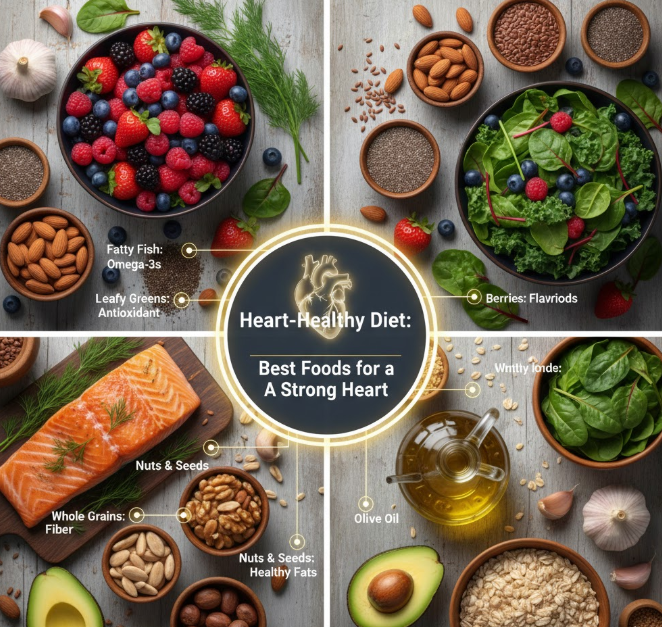
- Fatty fish rich in omega-3s help reduce inflammation and lower cholesterol.
- Leafy greens provide fiber and antioxidants that support heart health.
- Berries are packed with antioxidants that reduce oxidative stress and improve circulation.
- Nuts and seeds help lower LDL cholesterol and provide heart-healthy fats.
- Whole grains support heart health by regulating blood sugar and lowering cholesterol.
- Olive oil reduces bad cholesterol and inflammation, promoting overall cardiovascular health.
Why is a Heart Healthy Diet Important?
The heart is at the center of your circulatory system, pumping oxygen and nutrients throughout your body. Poor dietary choices, such as high consumption of unhealthy fats, sugars, and processed foods, can lead to the buildup of fat in the arteries (atherosclerosis), high cholesterol, high blood pressure, and other risk factors for heart disease. A heart healthy diet helps reduce these risk factors by improving cholesterol levels, lowering blood pressure, reducing inflammation, and supporting healthy blood vessels.
A heart healthy diet can help:
- Lower the risk of heart disease and stroke.
- Improve cholesterol and blood pressure levels.
- Reduce inflammation and improve circulation.
- Support blood vessel health and overall cardiovascular function.
Best Foods for a Strong Heart
Certain foods have been proven to boost heart health by providing essential nutrients that help lower cholesterol, reduce inflammation, and maintain a healthy blood pressure. Let’s explore these foods in detail.
1. Fatty Fish (Rich in Omega-3 Fatty Acids)
Fatty fish such as salmon, mackerel, sardines, and trout are excellent sources of omega-3 fatty acids, which play a critical role in heart health. Omega-3s help reduce inflammation, lower triglycerides, prevent blood clots, and improve circulation. Studies have shown that omega-3s can also help lower “bad” LDL cholesterol levels, boost “good” HDL cholesterol, and support overall cardiovascular health.
Key Benefits:
- Reduces inflammation in the arteries.
- Lowers triglycerides and LDL cholesterol.
Prevents blood clotting and improves circulation.
Best Sources of Omega-3 Fatty Acids:
| Fish Type | Omega-3 Content (per 3.5 oz) | Health Benefits |
| Salmon | 2.0-2.5 grams | Reduces inflammation, lowers triglycerides |
| Mackerel | 1.0-1.5 grams | Lowers LDL cholesterol, supports heart health |
| Sardines | 1.5-2.0 grams | Reduces plaque buildup, supports blood flow |
| Trout | 1.0 grams | Helps lower blood pressure, reduces clotting risk |
2. Leafy Greens (Rich in Nutrients and Antioxidants)
Leafy greens like spinach, kale, and Swiss chard are packed with essential nutrients, including fiber, vitamins (especially vitamin K), and minerals like magnesium. These vegetables help lower blood pressure, improve cholesterol levels, and reduce oxidative stress, which can damage the arteries over time. They are also rich in antioxidants that fight inflammation, a key contributor to heart disease.
Key Benefits:
- High in fiber, which helps lower cholesterol.
- Rich in antioxidants that protect against oxidative stress.
- Supports healthy blood pressure with potassium and magnesium.
Best Leafy Greens for Heart Health:
| Green Type | Nutrients | Health Benefits |
| Spinach | Fiber, vitamin K, folate, magnesium | Lowers blood pressure, supports blood vessel health |
| Kale | Vitamin A, C, K, antioxidants | Reduces cholesterol, combats oxidative stress |
| Swiss Chard | Magnesium, vitamin K, potassium | Regulates blood sugar, improves circulation |
| Collard Greens | Fiber, calcium, vitamin C | Promotes healthy heart function and lowers cholesterol |
3. Berries (Rich in Antioxidants)
Berries like blueberries, strawberries, raspberries, and blackberries are high in antioxidants, particularly flavonoids, which help reduce oxidative stress and inflammation. These compounds are known to reduce the risk of heart disease by improving blood vessel function and lowering blood pressure. Regular consumption of berries can improve cholesterol levels and protect against cardiovascular events.
Key Benefits:
- Packed with antioxidants like flavonoids.
- Help reduce inflammation and oxidative damage.
- Promote healthy blood pressure and cholesterol levels.
Antioxidant Content in Common Berries:
| Berry | Antioxidants (per 1/2 cup) | Heart Health Benefits |
| Blueberries | 10,000+ ORAC units | Reduces oxidative stress, improves blood vessel function |
| Strawberries | 2,000+ ORAC units | Lowers blood pressure, supports HDL (good) cholesterol |
| Raspberries | 3,000+ ORAC units | Helps reduce inflammation, regulates cholesterol |
| Blackberries | 7,000+ ORAC units | Protects against plaque buildup, supports heart health |
4. Nuts and Seeds (Healthy Fats and Fiber)
Nuts and seeds, such as almonds, walnuts, flaxseeds, chia seeds, and sunflower seeds, are excellent sources of healthy fats, fiber, and protein. These foods are particularly effective at lowering “bad” LDL cholesterol levels and boosting the body’s production of “good” HDL cholesterol. They also help manage blood pressure and reduce inflammation, making them a powerful addition to any heart healthy diet.
Key Benefits:
- Help lower LDL cholesterol and improve cardiovascular health.
- Rich in healthy fats like omega-3s.
- Support overall heart function and lower blood pressure.
Best Nuts and Seeds for Heart Health:
| Nut/Seed | Nutrients | Health Benefits |
| Walnuts | Omega-3s, fiber, antioxidants | Reduces inflammation, lowers cholesterol |
| Almonds | Healthy fats, protein, vitamin E | Supports heart health, lowers LDL cholesterol |
| Chia Seeds | Omega-3s, fiber, protein | Regulates blood sugar, lowers triglycerides |
| Flaxseeds | Omega-3s, fiber, lignans | Helps lower blood pressure, reduces cholesterol |
5. Whole Grains (High in Fiber)
Whole grains like oats, quinoa, and brown rice are rich in fiber, which plays a critical role in lowering cholesterol and regulating blood sugar. Fiber helps reduce “bad” LDL cholesterol and promotes healthy blood pressure levels. Whole grains are also full of essential vitamins and minerals that support overall heart health.
Key Benefits:
- High in soluble fiber, which lowers cholesterol.
- Helps regulate blood sugar levels, reducing heart disease risk.
- Full of vitamins and minerals that support heart health.
Best Whole Grains for Heart Health:
| Grain | Nutrients | Health Benefits |
| Oats | Soluble fiber, B vitamins | Lowers cholesterol, stabilizes blood sugar |
| Quinoa | Protein, fiber, magnesium | Reduces inflammation, supports blood vessel health |
| Brown Rice | Fiber, manganese, B vitamins | Helps control blood sugar, promotes heart health |
| Barley | Soluble fiber, antioxidants | Lowers cholesterol, supports digestion |
6. Olive Oil (Monounsaturated Fats)
Olive oil is rich in monounsaturated fats, which have been shown to reduce the risk of heart disease. It is a key ingredient in the Mediterranean diet, known for its heart healthy benefits. Olive oil can lower “bad” LDL cholesterol, increase “good” HDL cholesterol, and reduce inflammation, making it a staple for a heart healthy diet.
Key Benefits:
- Reduces bad cholesterol (LDL) and inflammation.
- Supports healthy blood vessels and reduces blood pressure.
- Improves overall cardiovascular health.
Heart Healthy Cooking Oils:
| Oil | Fat Composition | Health Benefits |
| Olive Oil | 75% monounsaturated | Reduces LDL cholesterol, supports heart health |
| Avocado Oil | 70% monounsaturated | Boosts HDL cholesterol, lowers triglycerides |
| Canola Oil | 60% monounsaturated | Reduces inflammation, lowers cholesterol |
How to Create a Heart Healthy Meal Plan
A heart healthy diet doesn’t have to be difficult. By focusing on nutrient-dense foods and reducing processed foods, you can create delicious, heart-healthy meals. Here are some simple steps for building a heart healthy meal plan:
- Focus on whole foods: Include whole grains, lean proteins, fruits, vegetables, nuts, and seeds.
- Incorporate healthy fats: Use olive oil, avocado, and nuts for healthy fats.
- Eat fish regularly: Aim for two servings of fatty fish like salmon or sardines per week.
- Eat a variety of fruits and vegetables: Aim to “eat the rainbow” by including a variety of colorful produce.
- Reduce salt intake: Limit processed foods, and opt for herbs and spices for flavor.
Lifestyle Changes to Support a Heart Healthy Diet
In addition to eating heart healthy foods, adopting a few lifestyle changes can further improve cardiovascular health:
- Exercise Regularly: Regular physical activity strengthens the heart, lowers blood pressure, and reduces the risk of heart disease. Aim for at least 150 minutes of moderate exercise each week.

- Maintain a Healthy Weight: Keeping your weight in a healthy range can reduce the strain on your heart and lower the risk of cardiovascular conditions.
- Limit Processed Foods and Salt: Minimize intake of highly processed foods, sodium, and sugary items, which can increase the risk of heart disease.
FAQ: Heart Healthy Diet
1. What foods are best for heart health?
Fatty fish, leafy greens, berries, nuts, seeds, whole grains, and olive oil are among the best foods for maintaining a strong heart.
2. Can a heart healthy diet help lower cholesterol?
Yes, foods like oats, nuts, seeds, and fatty fish can help lower LDL cholesterol and improve heart health.
3. How often should I eat heart healthy foods?
Incorporate heart healthy foods into your daily diet for maximum cardiovascular health benefits.
4. Can exercise improve heart health?
Yes, regular physical activity strengthens the heart, lowers blood pressure, and reduces the risk of heart disease.
5. Should I avoid all fats for heart health?
Not all fats are harmful. Healthy fats from foods like nuts, seeds, and olive oil are beneficial for heart health.
Conclusion
A heart healthy diet is one of the best ways to support cardiovascular health, reduce the risk of heart disease, and improve overall well-being. By incorporating foods like fatty fish, leafy greens, whole grains, and healthy fats into your meals, you can provide your heart with the nutrients it needs to function optimally. Along with a balanced diet, regular exercise, stress management, and weight control are key lifestyle factors in promoting a strong and healthy heart.
References
- Heart-healthy foods: What to eat and what to avoid — Harvard Health explains how a heart-healthy diet focuses on minimally processed vegetables, fruits, whole grains, beans, and healthy proteins to support cardiovascular health. (health.harvard.edu)
- Heart-healthy diet: 8 steps to prevent heart disease — Mayo Clinic outlines practical tips for adopting a heart-healthy diet, including limiting unhealthy fats and processed foods. (mayoclinic.org)
- The American Heart Association Diet and Lifestyle Recommendations — The American Heart Association provides guidance on healthy eating patterns, including reducing sodium and added sugars while choosing whole foods like fruits, vegetables, and whole grains. (heart.org)
- Heart-Healthy Eating Plan — The National Heart, Lung, and Blood Institute discusses a heart-healthy eating plan emphasizing vegetables, fruits, whole grains, lean proteins, and limiting saturated fat and sugary beverages. (nhlbi.nih.gov)
- Heart-Healthy Foods You Should Be Eating — Cleveland Clinic highlights plant-based foods, fruits, vegetables, and whole grains as cornerstones of a heart-healthy diet. (health.clevelandclinic.org)