For more than a year, I was losing my place in spreadsheets, rereading emails, and forgetting why I opened a file. Better sleep, task lists, a brain-training app, and another supplement helped only around the edges. A coworker mentioned MemoHive one afternoon, and I wrote the name down instead of buying it. That evening, I checked the ingredients, amounts, directions, guarantee, and prices. I ordered three bottles for a 75-day test, curious whether the routine could make my afternoons easier. This MemoHive review explains what changed.
MemoHive Review Summary
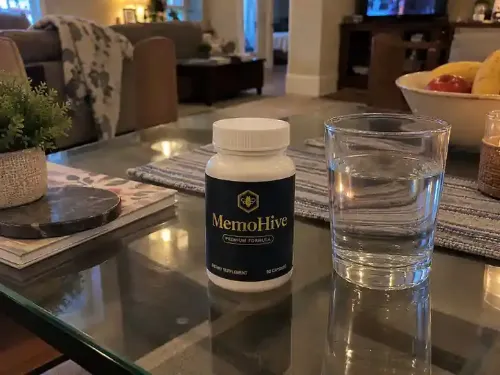
MY EXPERIENCE
- By week 2, I reread fewer lines at work.
- By week 4, I lost my place less often.
- By day 75, afternoons felt less scattered overall.
Recommendation : MemoHive is worth considering for adults seeking focus and memory support with consistent use.

Download Verified Purchase Receipt
Purchase independently verified bySupplement Tiger
Purchased Jun 27, 2026
About Me
My name is Linda Carter. I’m 55 and live in the Chicago area, where I work as an accountant. Most weekdays start around 6:15 with coffee, then I’m at my desk by about 8, working through spreadsheets, emails, reconciliations, and client questions. I still rely on my morning coffee, especially during busy accounting periods. My biggest issue was not forgetting everything; it was losing my place once the day became busy.
When I Started Losing the Thread
The change came slowly. I could still do my job, but interruptions became harder to shake off. I’d answer an email halfway through a reconciliation and then have to retrace what I had been doing.
I also reread ordinary emails because I had absorbed the words without absorbing the point. Outside work, I sometimes walked into another room and forgot why I was there. By midafternoon, I was working harder to stay in the same mental lane. I responded with better sleep, short task lists, less coffee, a brain-training app, and another supplement, yet busy afternoons still felt scattered.
How I Came to Know About Memo hive
I first heard about it in the office kitchen. I was complaining about a long afternoon when a coworker had a bottle of MemoHive with her. She said she had been taking it each morning and felt it helped her stay on track. There was no big sales pitch, which made me more curious than a glowing testimonial would have.
I was still skeptical. I had tried another supplement before and never found a consistent difference, so I looked MemoHive up later that evening instead of buying it on the spot.
What I Found
I mainly wanted a formula I could understand and a routine I could realistically follow.
- Five active ingredients, each with its own amount.
- Two capsules once daily with an 8-ounce glass of water, 20–30 minutes before a meal.
- Sixty capsules per bottle, or 30 servings.
- A 60-day money-back guarantee and listed support contact information.
- Manufactured in an FDA-registered facility and assembled in the USA, according to the supplied product page.
I also spent time checking the current formula and serving details because I wanted to understand exactly what I would be taking.
MemoHive supplement Ingredients
The label mattered to me more than a long sales pitch, so I read through each ingredient.
- BCAA 2:1:1 — 540 mg: Leucine, isoleucine, and valine. A recent systematic review found mixed findings on BCAAs and cognition, so I viewed this as one part of the formula.
- Bacopa Monnieri Extract — 200 mg: This was the ingredient that interested me most for a memory-focused formula. Human trials and reviews have examined Bacopa over longer periods, with some evidence for memory-related benefits.
- Rhodiola Rosea Extract — 100 mg: The product page lists a 3% salidroside standardization. Rhodiola has been studied for mental fatigue, though reliable evidence remains limited.
- L-Theanine — 100 mg: A tea-derived amino acid that has been studied for attention; trials have used doses from 100 mg upward depending on the task.
- Panax Ginseng Extract — 90 mg: Human research has examined ginseng for cognition, with a 2024 meta-analysis finding some benefit for memory but less consistent effects on overall cognition and attention.
I wasn't looking for one magic ingredient. I wanted a formula that made sense on paper and fit a normal morning. I finally decided to give it a shot.
MemoHive Capsules Order & Delivery
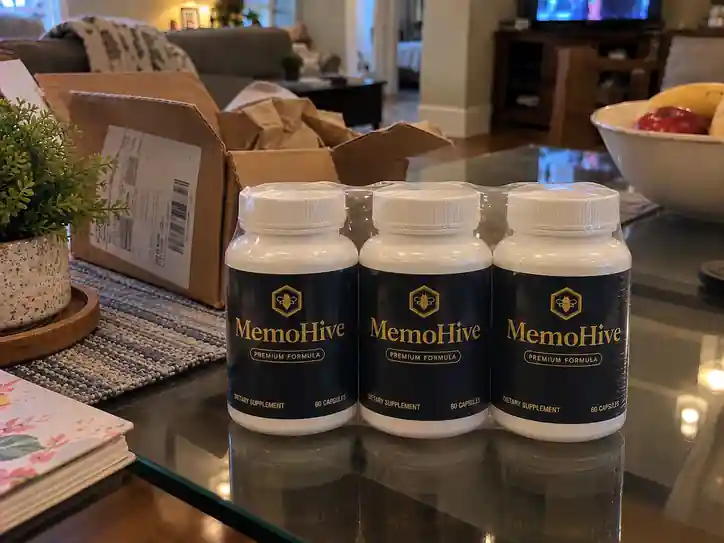
I chose three bottles because one bottle only covers 30 servings, while I wanted a longer test. The package was $207 total with free shipping when I ordered, and the 60-day guarantee made the decision easier to justify. It arrived around July 1 with the box intact. I checked the bottles that evening, then waited until the next morning so my first dose would be part of my normal routine.
Three bottles gave me 90 servings, enough for the full 75-day test.
MemoHive review: My Experience Over 75 Days
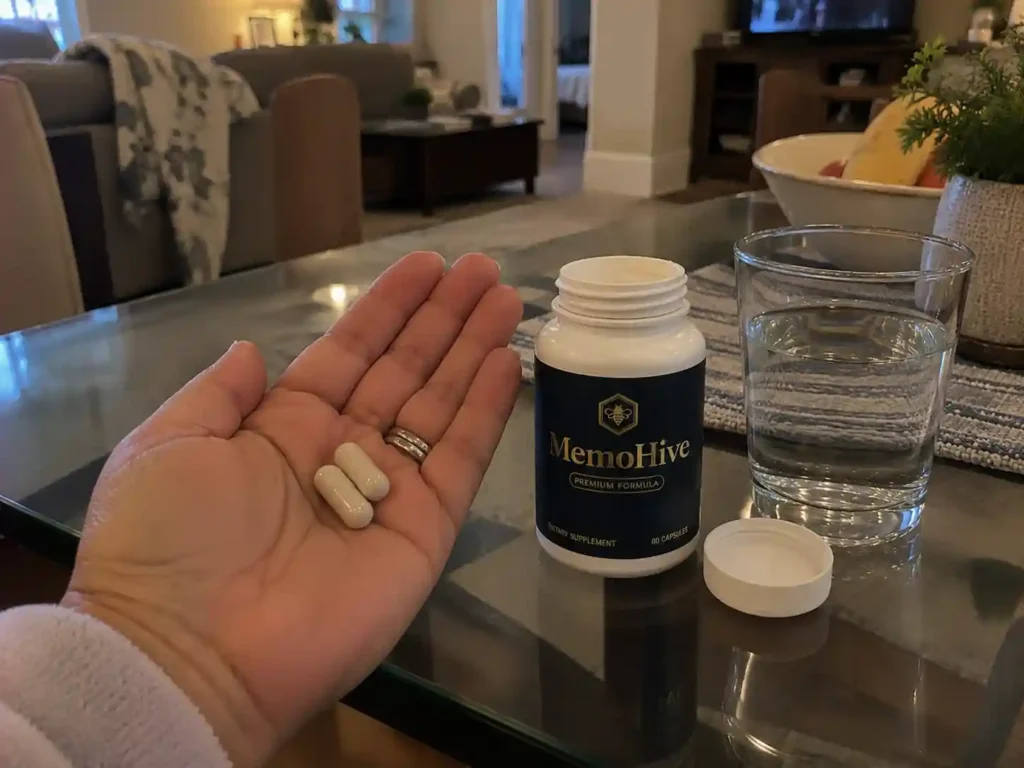
I followed the label throughout the test: two capsules once daily with an 8-ounce glass of water, aiming for 20-30 minutes before a meal. I kept the bottle in the kitchen and otherwise kept my routine fairly ordinary. My coffee stayed the same, I wasn't on a special diet, and I did not start an intense exercise plan alongside it. I missed a few mornings when I had to leave early, but most days were consistent.
Days 1-3
I noticed nothing meaningful. No sudden energy, no obvious memory change, no dramatic feeling. I went to work as usual and treated those first days as habit-building.
Week 1
The first week was still neutral. I had one decent afternoon, but I didn't assign it to the capsules. I had expected something gradual, so I simply kept going.
Weeks 2-3
Near the end of week two, I was working through a reconciliation that required switching between reports. I noticed I stayed with the same task longer and reread fewer lines.
The change was small enough that my first thought was, “Maybe I'm just having a good day.” When the same pattern showed up again over the next week, I started watching behavior instead of feelings.
The first useful sign was smoother continuity, not a burst of energy.
If an email interrupted me, I could often return to the spreadsheet without reconstructing the whole thought process. A minute or two of reset started feeling more like a quick glance and continue.
Week 4
By week four, the pattern felt more convincing because it matched the exact annoyances that had pushed me to try the product.
I was rereading ordinary emails less often, losing my place less in spreadsheet work, and having fewer moments where I opened a file and immediately forgot why. I kept a simple notebook and marked “scattered afternoons” when I had repeatedly restarted tasks or reread the same material. Early on, I was marking roughly three or four workdays in a typical week. Later, it felt closer to one or two.
I never treated that notebook as a medical measurement. It was simply my way of noticing whether the change was repeating.
Weeks 5-6
The experience became less exciting and more useful. I wasn't checking every few hours to see whether the supplement was “working.” I was simply getting through longer stretches of spreadsheet work without breaking concentration as often.
The clearest moment came around week six. I had a report open with three related files, answered two messages, returned to the report, and still knew exactly which adjustment I had been making. I looked at the clock and realized I had stayed with the task much better than usual.
A coworker noticed the difference too. She joked that I wasn't making the same comments about my afternoon brain fog. Later she told me I seemed more on top of things.
The Rough Week
There was one rough stretch when several deadlines landed at once and my sleep got worse. I was staying up later and drinking more coffee, and the scattered feeling came back. For a day or two, I wondered whether the improvement had been imaginary. Then my schedule settled, my sleep improved, and the familiar pattern returned.
That was useful to me because it kept my expectations realistic. I didn't see the supplement as a replacement for sleep, organization, or managing a busy workload.
Weeks 7-10 and Day 75
By the later weeks, I wasn't seeing a bigger and bigger effect. It was steadier than that. I still used a calendar and reminders. I still had normal forgetful moments. I could still get distracted when several messages arrived together.
The difference was frequency. I was more likely to pick up detailed work where I left off, reread fewer ordinary emails, and use reminders less as a safety net for routine tasks. I also felt less mentally self-conscious about the problem.
By day 75, September 14, I felt I had enough repeated experience to judge the routine from normal life rather than from isolated good or bad days.
Experience Table
| Time Period | What I Noticed | What Didn’t Change | Side Effects / Notes |
| Days 1-3 | No meaningful change | Normal afternoon scatter | No obvious issues |
| Week 1 | Routine was established | No clear result yet | One missed morning |
| Weeks 2-3 | Fewer rereads; easier task continuity | Changes were subtle | Normal coffee/work routine |
| Week 4 | Clearer pattern in work habits | Still had distraction | Simple notebook tracking |
| Weeks 5-6 | More stable concentration | Poor sleep still affected me | No obvious side effects |
| Final weeks | Fewer stops and less reminder use | Normal lapses remained | Pattern mostly held |
Memo Hive Feedback: Is This Brain Supplement Legit?
Yes, it worked for me. The main change was smoother continuity during detailed work: fewer rereads, less losing my place, and fewer scattered afternoons. I would tell another person to give the routine several weeks rather than expecting a dramatic first-day effect.
MemoHive supplement Pros and Cons
What I liked most was that the experience matched the reason I bought it: I could point to specific workday behaviors that changed.
What I Liked
- Simple two-capsule morning routine.
- Individual ingredient amounts were clearly listed.
- One bottle equals 30 servings.
- Changes showed up in ordinary work, not just how I felt.
- The 60-day guarantee reduced the first-purchase risk.
What I Didn’t Like
- The price is meaningful for long-term use.
- The 20-30-minute timing window can be awkward on rushed mornings.
- The gradual effect requires patience.
Who Should Buy MemoHive Capsules
I’d Consider It If You
- Work in a detail-heavy role and notice frequent stop-start concentration.
- Prefer one morning dose rather than several doses during the day.
- Are willing to give a routine several weeks.
- Want ingredient amounts shown on the label.
I’d Skip It If You
- Expect a dramatic effect in the first few days.
- Want a supplement to compensate for consistently poor sleep.
- Dislike taking capsules every morning.
- Don't want to make a longer-term purchase decision.
Side Effects I Noticed
I did not notice stomach problems, headaches, or another obvious side effect during my 75 days. I followed the recommended two-capsule daily amount. That is my personal experience, not a medical safety finding.
MemoHive Price
The package prices I saw were:
| Bundle | Per Bottle | Total Price | Shipping |
| 2 Bottles | $79 | $158 | +$9.99 |
| 3 Bottles | $69 | $207 | Free |
| 6 Bottles | $49 | $294 | Free |
I chose three bottles because I wanted a longer test without taking on the upfront commitment of six. The supplied page listed free shipping on the three-bottle package, and that is the package I ordered. Current package information is available through the MemoHive offer page.
Final Verdict: Does MemoHive Really Work?
Yes. Based on my 75-day experience, MemoHive did what I was personally hoping it would do. I lost my place less often, reread ordinary emails less, relied a little less on reminders, and felt less scattered during afternoon work. The change became noticeable gradually rather than immediately and held fairly steady later in the test. I had no obvious side effects, and I would personally buy it again. This MemoHive review is positive because the changes showed up repeatedly in the same ordinary work situations that had bothered me before.
Common Questions I Had
How long should I realistically test Memo Hive memory support capsules?
My first week was basically neutral. I noticed subtle changes around weeks two and three, felt more confident about the pattern around week four, and continued through 75 days before making my final judgment. My experience suggests patience matters.
Can I take MemoHive with blood-pressure medication?
I would check with a doctor or pharmacist first. NCCIH notes a reported interaction between rhodiola and losartan, and Asian ginseng can interact with some medicines. The right answer depends on the specific medication and your health history.
Can I combine Memo Hive Brain Support Formula with another memory supplement?
I would compare the ingredient lists and amounts before combining them. If you take medication or have a medical condition, ask a pharmacist or clinician rather than stacking similar products casually.
Should I take the capsules with food?
The supplied directions say two capsules once daily with an 8-ounce glass of water, 20–30 minutes before a meal. That is the routine I followed.
What happens if I miss a dose?
I would return to the normal once-daily routine rather than taking extra capsules. The product page says not to exceed the recommended dose.
Who should speak with a doctor before using MemoHive Capsules?
The supplied page says pregnant or nursing mothers, people under 18, and individuals with a known medical condition should consult a physician before using the product. It also says to keep it away from children and not use it if the safety seal is damaged or missing.
Did Memo Hive memory support capsules make me feel more energetic?
Not really. I expected I might notice a clearer mental-energy boost, but that wasn't my experience. The change was more practical: smoother task continuity, fewer rereads, and less afternoon scatter.
Would I buy it again?
Yes. The first purchase was a test. After 75 days, I knew the routine had been useful for me, and I would personally spend my own money on it again.
Medical Disclaimer
This article reflects one person’s experience and is for informational purposes only, not medical advice. Results vary. Anyone taking medication or living with a medical condition should consult a qualified healthcare professional before using a dietary supplement.

Amelia Harper oversees content verification efforts as an in-house review fact checker for Supplement Tiger. She conducts detailed pre-publication reviews to ensure supplement articles are accurate, balanced, and supported by verifiable information. Her responsibilities include checking ingredient references, confirming product claims, reviewing consumer-based evidence, and validating pricing, refund, and availability details. Amelia earned a Master of Science in Health Communication and is a Certified Professional in Healthcare Quality (CPHQ). Backed by more than seven years of experience in editorial auditing, wellness research, and health content review, she helps ensure readers can access dependable and transparent supplement information.
Post Comment