
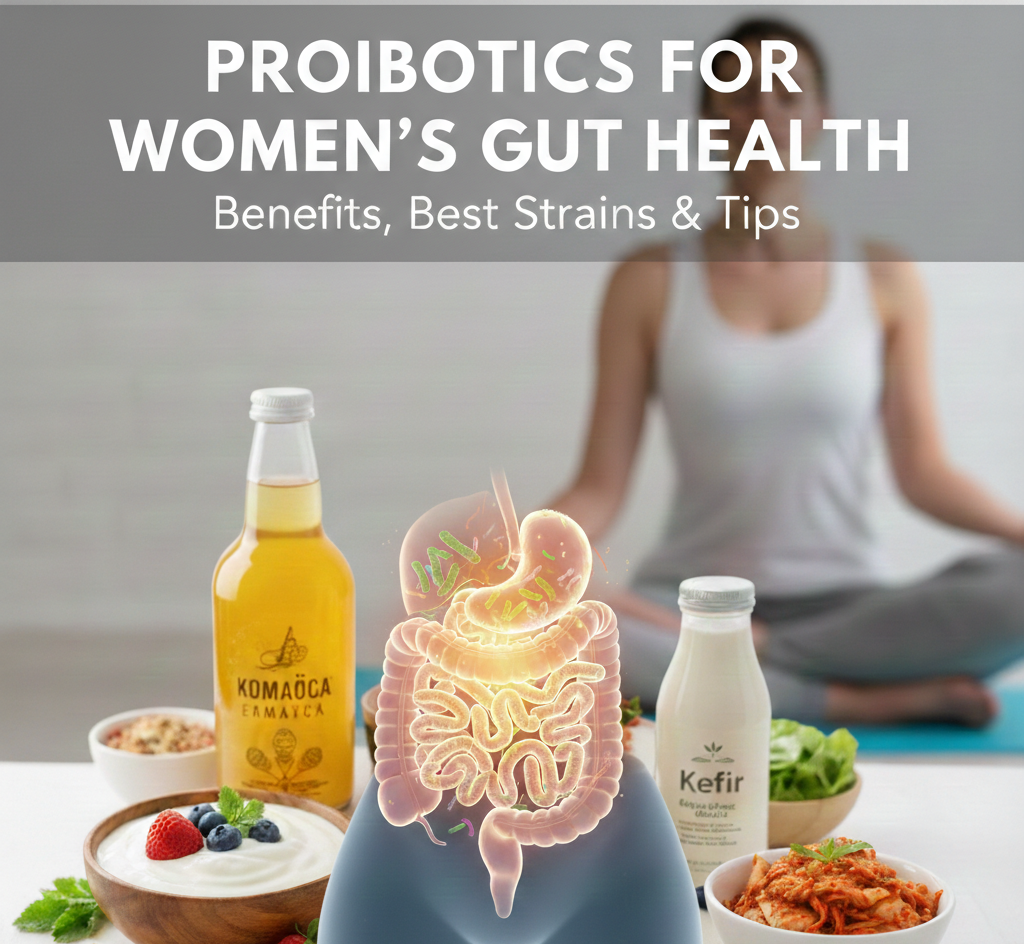

Struggling with digestive discomfort or hormonal imbalance? Probiotics for women’s gut health may be the key to restoring balance. Gut health is a cornerstone of overall wellness, influencing digestion, immunity, energy, mood, and hormonal regulation. For women, maintaining a healthy gut microbiome is especially important, as many face gut-related issues like bloating, constipation, and irritable bowel syndrome (IBS). Probiotics for women’s gut health help address these issues by promoting a balanced gut and enhancing overall well-being.
Probiotics, live microorganisms that support beneficial bacteria, help regulate digestion, balance hormones, strengthen immunity, and even boost mental clarity. For women, this means improved digestion, enhanced immunity, hormonal regulation, and better mental health.
In this article, we’ll explore how probiotics can support women’s gut health, the best probiotic strains for women, and actionable tips to incorporate them into your daily routine. Learn how to optimize your gut health and overall well-being with probiotics.
Key Takeaways
- Probiotics for women’s gut health are essential for improving digestion, reducing bloating, and promoting regular bowel movements.
- Consuming probiotics helps strengthen the immune system by enhancing gut-associated immunity and reducing inflammation.
- Probiotics play a role in regulating hormonal balance, helping manage symptoms of PMS, stress, and hormonal fluctuations.
- Certain probiotic strains can boost serotonin production, which supports mental clarity, mood, and emotional stability.
- Incorporating probiotic-rich foods like yogurt, kefir, kimchi, and kombucha into your diet can help promote a healthy gut microbiome.
- Probiotics for women’s gut health can be taken through food or supplements, with the right strains and dosages tailored to individual needs.
- Consistent probiotic intake, combined with healthy lifestyle habits, is key to achieving optimal gut health and overall wellness.
What Are Probiotics?
Probiotics are live microorganisms that confer health benefits when consumed in adequate amounts. They are commonly referred to as “good” bacteria, as they help maintain a balanced gut microbiome by supporting the growth of beneficial microorganisms while preventing harmful bacteria from taking over.
The human gut is home to trillions of microorganisms, including bacteria, fungi, and viruses, that form a diverse ecosystem. This ecosystem plays a vital role in digesting food, producing essential nutrients, and protecting against harmful invaders. A healthy balance of gut bacteria is necessary for proper digestive function, immune system strength, and even mental well-being. When this balance is disrupted, it can lead to issues like bloating, gas, constipation, and more serious health concerns.
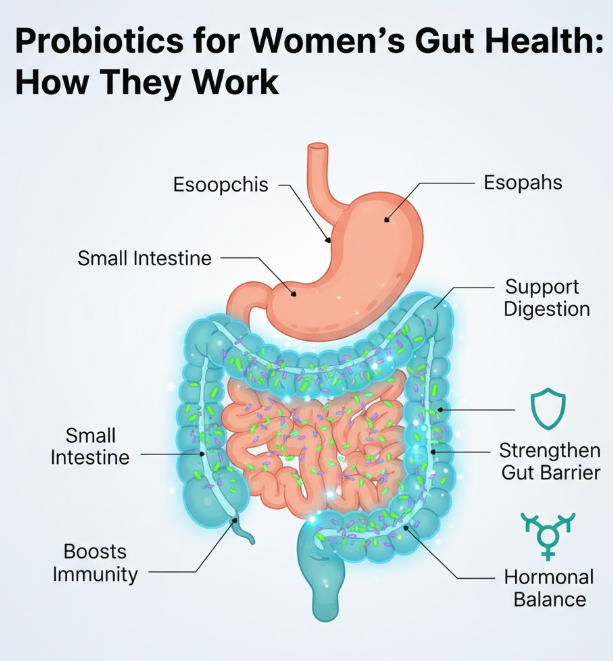
Probiotics for women’s gut health play several important roles:
- Restoring Gut Balance: Probiotics help restore the balance of beneficial bacteria in the gut, which may be disrupted by factors like poor diet, stress, medication (e.g., antibiotics), and illness.
- Supporting Digestion: Probiotics aid in the breakdown of food, making it easier to absorb essential nutrients and improve digestion.
- Strengthening the Gut Barrier: Probiotics help strengthen the intestinal lining, preventing harmful substances from leaking into the bloodstream—a condition known as “leaky gut.”
- Regulating Hormonal Health: The gut microbiome influences the metabolism of hormones like estrogen and cortisol, which are critical for maintaining hormonal balance in women.
Why Women Should Prioritize Probiotics for Gut Health
Women’s health is uniquely affected by hormones, menstrual cycles, pregnancy, and menopause. These fluctuations can alter the balance of gut bacteria, making it even more important for women to maintain a healthy gut microbiome. Beyond digestive function, probiotics for women’s gut health can help manage symptoms related to hormonal changes, stress, and immune function.
Here’s a deeper look at why probiotics should be prioritized by women:
1. Digestive Health
Women often experience digestive discomfort, including bloating, gas, and constipation. These issues can worsen during hormonal changes, particularly around menstruation and pregnancy. During these times, the body’s hormonal fluctuations can lead to changes in digestion and gut motility.
Probiotics for women’s gut health can help by:
- Reducing Bloating & Gas: Probiotics restore balance to gut bacteria, helping reduce excessive gas production and bloating. They promote the growth of beneficial bacteria that help break down food more efficiently, reducing the discomfort associated with gas buildup.
- Promoting Regular Bowel Movements: Probiotics improve motility, helping to relieve constipation by supporting the natural movement of food through the digestive tract.
- Improving Nutrient Absorption: By optimizing digestion, probiotics enhance the absorption of essential nutrients, including magnesium, vitamin B12, and folate, which are important for women’s health. This ensures that the body is receiving all the nutrients it needs for energy and overall function.
Probiotics for women’s gut health contribute to a smoother, more comfortable digestive system by improving the digestion and absorption of nutrients, reducing common digestive complaints like bloating, and promoting regularity.
| Benefit | How Probiotics for Women’s Gut Health Help |
| Reduced Bloating | Alleviates abdominal discomfort caused by gas and bloating |
| Promotes Regular Bowel Movements | Supports motility and ensures smooth digestion |
| Enhances Nutrient Absorption | Improves absorption of key nutrients like B12 and folate |
2. Immune Support
The gut is a major player in immune function, with approximately 70–80% of the body’s immune cells residing in the intestines. This connection means that the health of your gut microbiome directly impacts your ability to fight off infections and maintain overall health. For women, whose immune systems may be influenced by hormonal changes, stress, or pregnancy, maintaining a healthy gut microbiome is crucial.
Probiotics for women’s gut health can enhance immune function by:
- Boosting Gut-Associated Immunity: Probiotics support immune function by promoting the growth of beneficial bacteria that help protect against infections. These beneficial bacteria stimulate the production of immune cells, such as T cells and macrophages, which defend the body from pathogens.
- Reducing Inflammation: Chronic inflammation is a major contributor to many diseases, including autoimmune disorders and metabolic issues. Probiotics help reduce inflammation in the body by restoring balance to the gut microbiome, reducing the production of harmful substances that contribute to systemic inflammation.
- Preventing Infections: Regular probiotic use has been shown to lower the risk of infections, including urinary tract infections (UTIs) and respiratory illnesses, which women are often more susceptible to due to hormonal fluctuations.
By supporting the immune system and reducing inflammation, probiotics help maintain overall health and wellness, reducing the likelihood of frequent infections.
| Benefit | How Probiotics for Women’s Gut Health Help |
| Boost Immune Function | Strengthens gut-associated immunity to fight infections |
| Reduce Systemic Inflammation | Promotes a healthy balance of gut bacteria that reduces inflammation |
| Infection Prevention | Reduces the risk of infections, including UTIs and respiratory infections |
3. Hormonal Balance
Hormonal fluctuations during menstruation, pregnancy, perimenopause, and menopause can significantly affect women’s gut health. These changes in hormones, such as estrogen and progesterone, influence digestion, gut motility, and immune function. As a result, probiotics for women’s gut health become even more crucial.
Probiotics support hormonal balance by:
- Regulating Estrogen Levels: The gut is responsible for metabolizing estrogen. Probiotics help regulate estrogen levels, which can reduce the risk of estrogen dominance, a condition associated with issues like PMS, fibroids, and endometriosis.
- Supporting Cortisol Balance: Prolonged stress can lead to high levels of cortisol, a stress hormone, which disrupts digestion and leads to hormonal imbalances. Probiotics help regulate cortisol levels, improving stress resilience and mood.
- Managing PMS Symptoms: Many women suffer from premenstrual syndrome (PMS), which includes mood swings, irritability, and fatigue. Probiotics help alleviate these symptoms by supporting a healthy balance of gut bacteria that influences serotonin and other neurotransmitters, which play a role in mood regulation.
Probiotics help women maintain a healthy hormonal balance, reducing the physical and emotional symptoms that accompany hormonal fluctuations.
| Benefit | How Probiotics for Women’s Gut Health Help |
| Regulates Estrogen | Supports estrogen metabolism, reducing hormone imbalances |
| Manages Stress | Reduces cortisol levels, improving mood and energy |
| Alleviates PMS Symptoms | Helps balance hormones during the menstrual cycle |
4. Mental Health
The gut-brain axis the communication pathway between the gut and the brain has become a significant area of research, particularly in understanding how gut health influences mental well-being. Probiotics for women’s gut health play a key role in supporting mental health by balancing gut bacteria and enhancing the production of neurotransmitters that regulate mood and cognition.

Probiotics for women’s gut health can support mental well-being by:
- Boosting Serotonin Production: Serotonin is a neurotransmitter that regulates mood, and approximately 90% of serotonin is produced in the gut. Probiotics can stimulate the production of serotonin, improving mood and reducing symptoms of anxiety and depression.
- Enhancing Cognitive Function: A healthy gut microbiome supports brain function by improving focus, memory, and mental clarity. This can be particularly important for women who face mental fatigue or “brain fog” during hormonal fluctuations.
- Promoting Better Sleep: Probiotics can improve sleep by reducing gut-related discomfort, such as bloating or gas, which can interfere with restful sleep. Proper sleep is essential for mental health, helping to reduce stress and improve overall well-being.
By improving gut health, probiotics contribute to better mental clarity, mood stability, and emotional resilience.
| Benefit | How Probiotics for Women’s Gut Health Help |
| Reduces Anxiety | Promotes serotonin production and improves mood stability |
| Improves Mental Clarity | Enhances cognitive function and concentration |
| Promotes Better Sleep | Reduces stress and balances gut bacteria to promote restful sleep |
Top Probiotic Foods for Women’s Gut Health
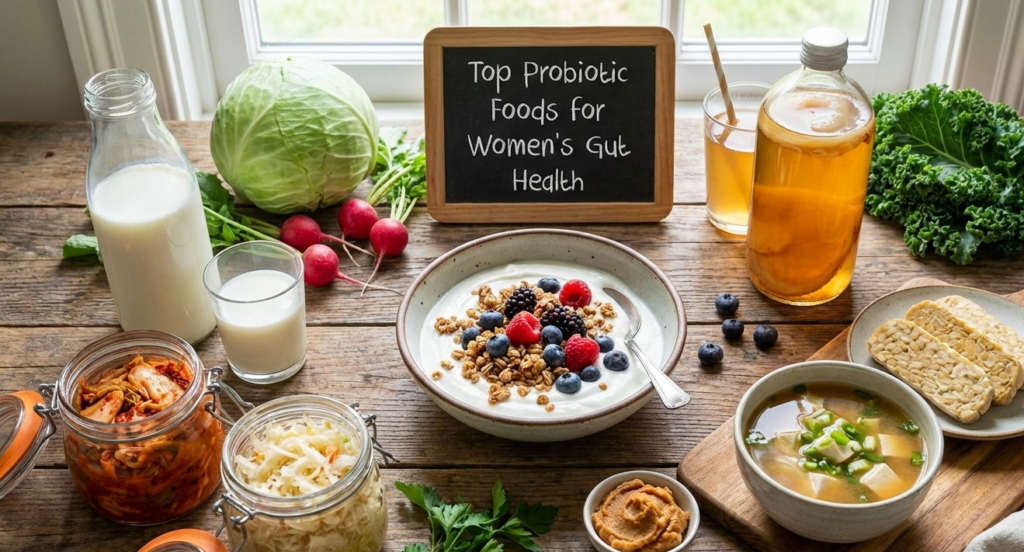
Incorporating probiotic-rich foods into your daily diet is one of the most effective ways to support probiotics for women’s gut health. These foods provide beneficial microorganisms that naturally enhance gut flora and improve digestive, immune, and hormonal health. Some of the best probiotic foods for women include:
| Probiotic Food | Key Strains/Notes | Health Benefits |
| Yogurt with live cultures | Lactobacillus, Bifidobacterium | Supports digestion and immunity, boosts calcium absorption |
| Kefir | Multiple strains (Lactobacillus, Bifidobacterium, Saccharomyces) | Enhances gut microbiome diversity and nutrient absorption |
| Kimchi & Sauerkraut | Lactobacillus plantarum, Leuconostoc | Boosts immunity and provides fiber for gut bacteria |
| Miso & Tempeh | Fermented soy strains | Supports gut health and provides protein and micronutrients |
| Kombucha | Mixed bacteria and yeast cultures | Promotes digestion and supports gut flora balance |
Probiotic Supplements: Tips & Guidelines
While food is an excellent source of probiotics, supplements can be a convenient and effective way to ensure you’re getting the right strains in the right amounts for women’s gut health. When choosing a probiotic supplement, follow these guidelines:
- Choose High-Quality Products: Look for reputable brands that clearly label their probiotic strains and provide verified CFU (colony-forming unit) counts.
- Start Slow: Begin with a small dose to allow your body to adjust to the new bacteria and minimize digestive discomfort.
- Consult a Healthcare Professional: Always check with your healthcare provider before adding probiotics to your routine, especially if you are pregnant, breastfeeding, or have pre-existing health conditions.
Common Mistakes That Limit Probiotic Benefits

To make the most of probiotics for women’s gut health, avoid these common mistakes:
| Mistake | Why It Limits Benefits |
| Skipping Daily Intake | Inconsistent use prevents probiotics for women’s gut health from balancing the gut microbiome effectively |
| Neglecting Prebiotics | Prebiotics feed beneficial bacteria; without them, probiotics for women’s gut health may not thrive |
| Choosing Low-Quality Probiotics | Without verified strains and CFU counts, probiotics for women’s gut health may be ineffective |
| Expecting Instant Results | Probiotics for women’s gut health require patience and consistent use to yield noticeable results |
Final Thoughts
Probiotics for women’s gut health are a powerful tool for improving digestion, enhancing immune function, supporting hormonal balance, and boosting mental well-being. Whether you opt for probiotic-rich foods or supplements, regular intake can significantly improve your overall health. When paired with a balanced diet, regular exercise, and stress management, probiotics for women’s gut health can support a vibrant, healthy life.
Maintaining consistent intake of probiotics, while staying mindful of your overall lifestyle, can optimize your gut health and ultimately lead to better digestion, improved mood, and greater overall wellness.
Disclaimer
This article is for informational purposes only and is not intended as medical advice. Always consult with a healthcare professional before starting any new dietary supplement, especially if you are pregnant, breastfeeding, or have any pre-existing medical conditions.
Frequently Asked Questions
1. What are probiotics and how do they benefit women’s gut health?
Probiotics are live microorganisms that, when consumed in adequate amounts, offer health benefits. They support a balanced gut microbiome, aid digestion, enhance immune function, and help regulate hormones, contributing to overall well-being.
2. Can probiotics help with bloating and digestion issues?
Yes, probiotics can reduce bloating and improve digestion by restoring balance in the gut. They promote regular bowel movements, alleviate gas, and enhance nutrient absorption, leading to a more comfortable digestive process.
3. Are there specific probiotic strains that benefit women more?
Certain strains, such as Lactobacillus and Bifidobacterium, are particularly beneficial for women’s gut health. These strains support digestive health, boost immunity, and help regulate hormones like estrogen, which is important for maintaining overall health.
4. Can probiotics help with hormonal imbalances?
Probiotics can influence hormone metabolism by balancing the gut microbiome. They help regulate cortisol levels, support estrogen metabolism, and alleviate symptoms related to hormonal fluctuations like PMS, stress, and menopause.
5. How long does it take to see the benefits of probiotics for gut health?
The time it takes to notice benefits varies, but generally, people may see improvements in digestion and bloating within 1-2 weeks. For long-term effects, such as hormonal balance and improved immunity, it may take 4-6 weeks of consistent probiotic use.
References
- A comprehensive review of probiotics and human health — current evidence. (2024). Frontiers in Microbiology. Available at https://www.frontiersin.org/journals/microbiology/articles/10.3389/fmicb.2024.1487641/full
- Cresci, G. (2023). The role of probiotics in women’s health: An update narrative review. ScienceDirect. Available at https://www.sciencedirect.com/science/article/pii/S1028455923003017
- A review on probiotics and dietary bioactives. (2024). Insights on metabolic well‑being and probiotic mechanisms. ScienceDirect. Available at https://www.sciencedirect.com/science/article/pii/S2772753X25000358
- Probiotic bacteria regulate gut hormones, study finds. (2024). The FASEB Journal. Available at https://www.faseb.org/journals-and-news/latest-news/probiotic-bacteria-regulate-gut-hormones
- Impact of Probiotics and Prebiotics on Gut Microbiome and Hormonal Regulation. (2023). MDPI. Available at https://www.mdpi.com/2624-5647/6/4/56