
Menopause is a major life transition that brings about a variety of physical, emotional, and cognitive changes. One of the most commonly experienced yet less discussed symptoms is menopause brain fog. This condition manifests as forgetfulness, difficulty concentrating, mental fatigue, and an overall sense of mental cloudiness. If you're experiencing these symptoms, you're not alone. Many women encounter these cognitive shifts due to hormonal changes during this phase.
Though menopause brain fog is temporary for most, it can still be frustrating and impactful. Fortunately, there are several ways to manage and alleviate these symptoms. In this article, we'll explore the causes behind menopause brain fog, its symptoms, and practical solutions to restore mental clarity through diet, lifestyle changes, and natural remedies.
Key Takeaways
- Brain Fog is Common: Hormonal changes during menopause often lead to forgetfulness and difficulty concentrating.
- Diet Matters: Omega-3s, antioxidants, and magnesium-rich foods support brain health and mental clarity.
- Herbs May Help: Ginkgo biloba and ashwagandha can reduce brain fog and stress, but consult a doctor first.
- Sleep & Stress: Prioritize good sleep and manage stress to improve cognitive function.
- Lifestyle Adjustments: Stay organized and incorporate exercise to reduce mental fatigue.
- Seek Medical Help: Consult a doctor if brain fog impacts daily life significantly.
What is Menopause Brain Fog?
Menopause brain fog refers to a group of cognitive symptoms that many women experience during the menopause transition. It's not a medical condition in itself but rather a collection of challenges related to memory, focus, and mental clarity. Common symptoms include forgetfulness, difficulty concentrating, mental fatigue, and confusion when trying to find the right words.
This cognitive fog occurs as a result of hormonal fluctuations that affect the brain’s normal functioning. For many women, menopause brain fog feels like a mental cloud that makes everyday tasks more difficult. Although brain fog can feel disruptive, it is usually temporary, and there are ways to improve mental clarity and reduce the symptoms.
The Science Behind Menopause Brain Fog: Hormonal Changes and Cognitive Function
The primary cause of menopause brain fog is hormonal fluctuations, particularly the decline in estrogen and progesterone. Estrogen plays a crucial role in brain health by supporting neurotransmitters that regulate mood, memory, and cognition. As estrogen levels drop during menopause, many women notice a decline in their cognitive abilities, such as memory and concentration.
Progesterone, another hormone that decreases during this time, also plays a role in mood regulation and brain function. A reduction in progesterone levels can increase anxiety, disrupt sleep, and contribute to the mental fog.
Hormonal Changes and Their Impact on the Brain
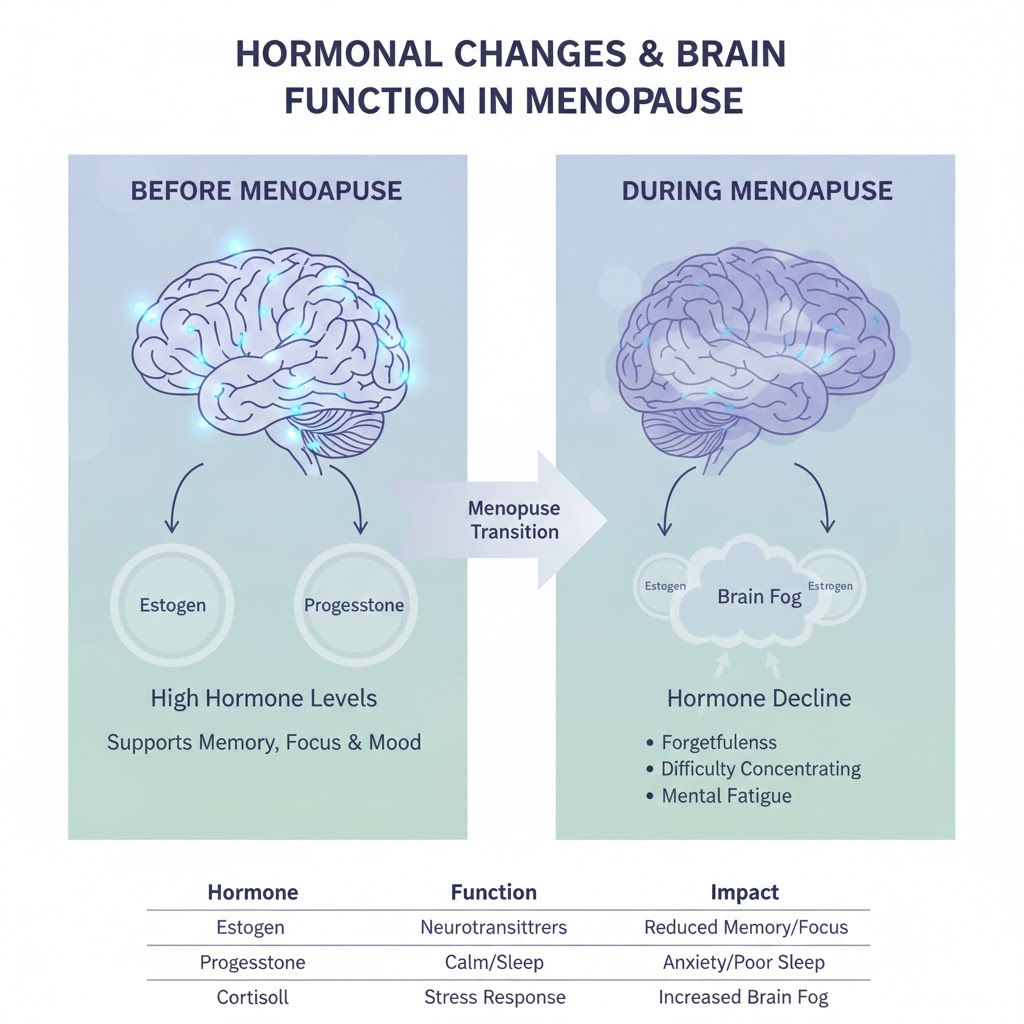
| Hormone | Effect on Brain Function | Impact During Menopause |
| Estrogen | Supports neurotransmitters for cognition | Decrease in estrogen reduces memory and focus |
| Progesterone | Helps manage anxiety and promotes relaxation | Reduction causes heightened anxiety and poor sleep |
| Cortisol | Stress hormone that impacts memory and focus | High levels during stress worsen brain fog |
Common Symptoms of Menopause Brain Fog
Brain fog during menopause can present in a variety of ways. The most common symptoms include:
- Forgetfulness: Frequently forgetting appointments, where you left things, or struggling to recall names or tasks.
- Difficulty Concentrating: Trouble staying focused on tasks, reading, or completing work.
- Mental Fatigue: A feeling of constant exhaustion, as if the brain is “running on empty.”
- Trouble Finding Words: Struggling to remember words or phrases during conversations.
- Slower Thought Processing: Difficulty processing information quickly, making decisions more time-consuming.
While these symptoms can vary in severity, they are disruptive and can significantly impact day-to-day life. Fortunately, there are strategies you can implement to reduce brain fog and improve mental clarity.
Dietary Tips to Help Relieve Menopause Brain Fog
Diet plays a crucial role in brain health and can have a significant impact on managing cognitive symptoms during menopause. Incorporating certain brain-boosting foods into your diet can help support mental clarity. Here are some dietary tips:
Omega-3 Fatty Acids
Omega-3s, found in fatty fish like salmon, flaxseeds, and walnuts, are essential for maintaining brain health. Omega-3s help reduce inflammation and improve blood flow to the brain, promoting cognitive function.
Key Benefits:
- Improves memory and cognitive clarity.
- Reduces the risk of cognitive decline.
Antioxidant-Rich Foods
Berries such as blueberries, strawberries, and raspberries are rich in antioxidants like anthocyanins, which help protect brain cells from oxidative stress. Including these in your diet can help combat the effects of brain fog.
Key Benefits:
- Protects brain cells from oxidative stress.
- Enhances memory and cognitive function.
Whole Grains
Whole grains like oats, quinoa, and brown rice are packed with B vitamins, particularly B6 and B12. These vitamins play a key role in brain health by supporting neurotransmitter function, which helps with memory and focus.
Key Benefits:
- Provides steady glucose to fuel the brain.
- Supports long-term cognitive function.
Magnesium-Rich Foods
Magnesium is crucial for nerve function and relaxation. During menopause, magnesium can help reduce anxiety, improve sleep, and alleviate mental fatigue—key contributors to brain fog.
Key Benefits:
- Reduces anxiety and mental fatigue.
- Supports better sleep quality, improving cognitive clarity.
Hydration
Proper hydration is essential for optimal brain function. Even mild dehydration can impair memory, focus, and overall cognitive performance. Make sure to drink plenty of water throughout the day.
Key Benefits:
- Improves memory and concentration.
- Prevents sluggishness and fatigue.
Example Table of Brain-Boosting Foods
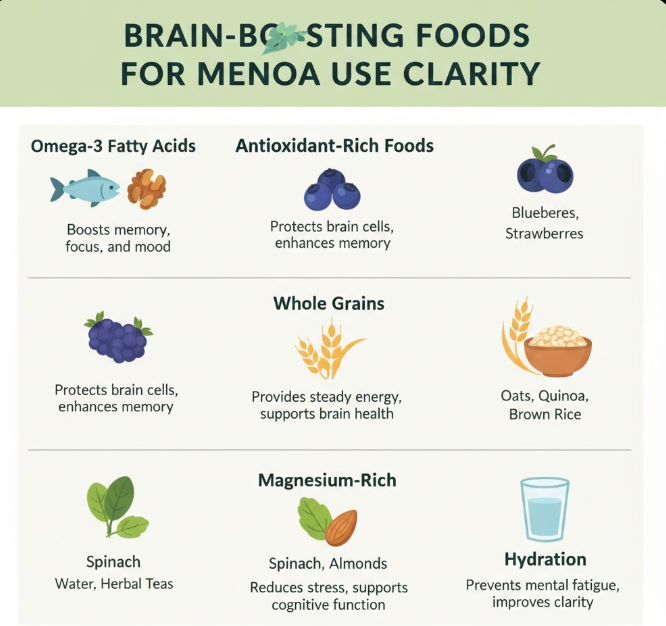
| Food Group | Examples | Key Benefits |
| Omega-3 Fatty Acids | Salmon, Flaxseeds, Walnuts | Boosts memory, focus, and mood regulation |
| Antioxidant-Rich Foods | Blueberries, Strawberries | Protects brain cells, enhances memory |
| Whole Grains | Oats, Quinoa, Brown Rice | Provides steady energy, supports brain health |
| Magnesium-Rich Foods | Spinach, Almonds, Black Beans | Reduces stress, supports cognitive function |
| Hydration | Water, Herbal Teas | Prevents mental fatigue, improves clarity |
Natural Remedies to Relieve Menopause Brain Fog
In addition to dietary changes, several natural remedies can help alleviate the symptoms of brain fog. Here are a few options that may work for you:
Herbal Supplements
Certain herbs are known for their cognitive-boosting properties, which may help with brain fog during menopause. Some popular options include:
- Ginkgo Biloba: Known to increase blood flow to the brain, improving memory and focus.
- Rhodiola Rosea: This adaptogen helps reduce stress and improves mental clarity.
- Ashwagandha: Known for reducing cortisol levels, which helps manage stress and improve cognitive function.
Before starting any herbal supplements, consult with your healthcare provider to ensure they are safe for you.
Mindfulness and Meditation

Mindfulness practices like meditation can help reduce mental fatigue and improve cognitive clarity. Research has shown that regular mindfulness practice can enhance focus and memory while reducing stress.
Physical Exercise
Exercise increases blood flow to the brain and supports overall cognitive health. Activities such as walking, swimming, or cycling can enhance memory, focus, and mood while reducing stress levels.
Lifestyle Changes to Manage Brain Fog During Menopause
Incorporating certain lifestyle changes can significantly help in managing brain fog during menopause. Here are some helpful strategies:
Prioritize Sleep
Sleep disturbances are common during menopause and can exacerbate brain fog. Aim for 7-9 hours of quality sleep each night. If you're struggling with sleep, try improving your sleep hygiene by establishing a regular bedtime routine and using relaxation techniques before bed.
Sleep Tips:
- Maintain a consistent sleep schedule.
- Avoid caffeine or heavy meals close to bedtime.
- Practice relaxation techniques like deep breathing.
Manage Stress
Stress is a major contributor to brain fog, as it leads to higher levels of cortisol, which impairs memory and focus. Engage in stress-reduction techniques like yoga, deep breathing exercises, or mindfulness meditation to lower cortisol levels.
Stress Reduction Tips:
- Practice daily meditation or yoga.
- Engage in activities that help you relax, such as reading or listening to music.
- Practice deep breathing exercises to reduce stress.
Stay Organized
Brain fog can make it difficult to stay organized. Use planners, to-do lists, or digital reminders to keep track of tasks and appointments. Breaking tasks down into smaller steps can also help make them feel more manageable.
Organization Tips:
- Use digital tools or planners to track appointments and deadlines.
- Break larger tasks into smaller, achievable steps.
- Set up reminders on your phone or calendar to avoid forgetting important tasks.
The Role of Sleep and Stress in Menopause Brain Fog
Both sleep and stress play key roles in brain function. Poor sleep quality and high stress levels can exacerbate cognitive fog, while improving both can help reduce symptoms.
- Sleep: Poor sleep quality can worsen brain fog by impairing memory and focus. Improving your sleep hygiene and ensuring you get enough rest each night can help combat cognitive symptoms.
- Stress: High stress levels increase cortisol, which can impair cognitive function. Regular stress management through mindfulness, yoga, and relaxation exercises can help reduce brain fog.
How Long Does Menopause Brain Fog Last?
The duration of brain fog during menopause varies. For some women, it may only last a few months during perimenopause, while for others, it could persist for several years. Typically, symptoms improve once hormone levels stabilize after menopause, but the process can take time. For many women, brain fog starts to lift after 1-2 years, though it may linger in some cases.
When to Seek Medical Help for Menopause Brain Fog
If brain fog significantly impacts your daily life or if you experience symptoms like extreme memory loss, confusion, or difficulty performing basic tasks, it may be time to consult a healthcare provider. A doctor can help rule out other potential causes and offer further guidance on managing the condition. Additionally, if you’re considering new treatments or supplements, it’s important to consult with your doctor to ensure they are safe for your health needs.
FAQ: Menopause Brain Fog
1. Is menopause brain fog a normal part of menopause?
Yes, brain fog is a common symptom of menopause caused by hormonal fluctuations. It is usually temporary but can be disruptive.
2. How can I manage brain fog during menopause?
Managing brain fog involves a combination of dietary changes, regular exercise, stress management, and prioritizing good sleep hygiene. Supplements like ginkgo biloba or rhodiola rosea may also help, but consult with your doctor before using them.
3. Can brain fog last after menopause?
Yes, brain fog can persist after menopause for some women, although it typically improves after hormone levels stabilize. It’s important to maintain a healthy lifestyle to reduce symptoms.
4. Are there any foods I should avoid to reduce brain fog?
While no specific foods cause brain fog, it’s best to limit processed foods, excessive caffeine, and sugary foods, which can affect energy levels and exacerbate symptoms.
5. When should I consult a doctor about brain fog?
If brain fog is severely affecting your daily life or you notice sudden memory loss, confusion, or difficulty functioning, it’s important to consult your doctor.
Conclusion
Menopause brain fog is a natural part of the transition into menopause, but it doesn't have to control your life. Understanding the hormonal changes behind it and implementing effective dietary, lifestyle, and stress management strategies can help alleviate symptoms and restore mental clarity. With the right approach, you can manage brain fog and continue to thrive during this stage of life. Always consult your healthcare provider before making significant changes to your diet or starting any new treatments.
References
- Mayo Clinic News Network – Mayo Clinic Minute: Does menopause cause brain fog? https://newsnetwork.mayoclinic.org/discussion/mayo-clinic-minute-does-menopause-cause-brain-fog/?utm_source=chatgpt.com
- Harvard Health – Menopause and brain fog: What’s the link? https://www.health.harvard.edu/womens-health/menopause-and-brain-fog-whats-the-link?utm_source=chatgpt.com
- Healthline – Menopause Brain Fog: Symptoms, Treatment, Is It Real, and More https://www.healthline.com/health/menopause/menopause-brain-fog
- GoodRx – Menopause and Brain Fog: Why It Happens and How to Treat It https://www.goodrx.com/conditions/menopause/menopause-brain-fog
- Menopause Network – Menopause Brain Fog: Causes and How to Clear It https://menopausenetwork.org/menopause-brain-fog-causes-solutions/?utm_source=chatgpt.com

Amelia Harper oversees content verification efforts as an in-house review fact checker for Supplement Tiger. She conducts detailed pre-publication reviews to ensure supplement articles are accurate, balanced, and supported by verifiable information. Her responsibilities include checking ingredient references, confirming product claims, reviewing consumer-based evidence, and validating pricing, refund, and availability details. Amelia earned a Master of Science in Health Communication and is a Certified Professional in Healthcare Quality (CPHQ). Backed by more than seven years of experience in editorial auditing, wellness research, and health content review, she helps ensure readers can access dependable and transparent supplement information.
Post Comment