

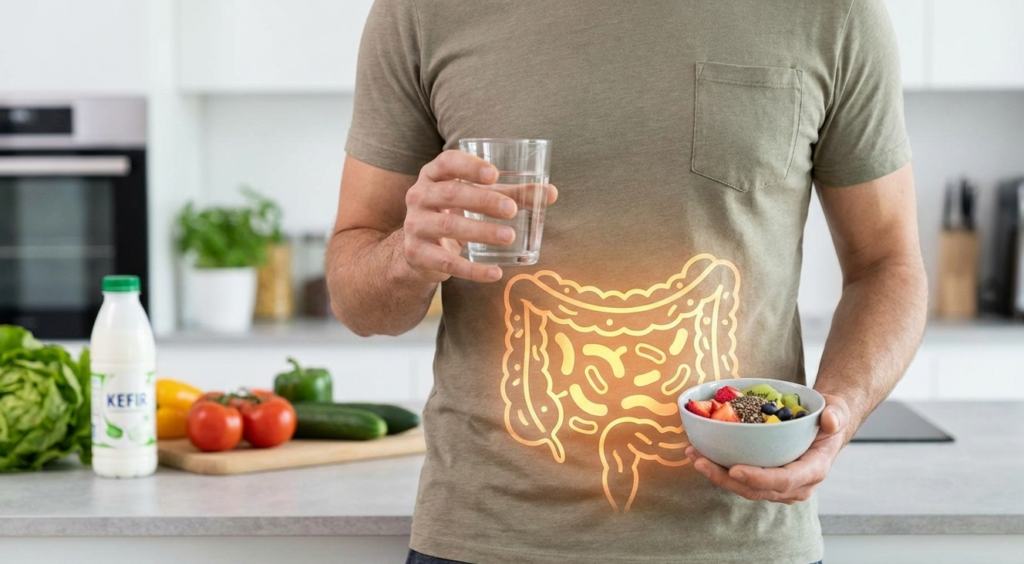
For men looking to improve gut health, a few key habits can make all the difference. Whether you’re dealing with digestive issues like bloating or constipation or just want to optimize your digestion, the solution is often simpler than you think.
To improve gut health for men, it’s important to focus on foods that support the gut microbiome, maintain regular movement, and manage stress. The key is consistency and making small, sustainable changes.
What Gut Health for Men Means
Gut health for men isn’t about having a “perfect” microbiome. Instead, it’s about how your digestive system works on a daily basis. Healthy gut function means regular bowel movements, manageable bloating, and digestion that doesn’t cause discomfort.
Gut health also depends on how your microbiome breaks down food that your body can’t digest on its own. Since everyone’s gut is different, what works for one man might not be the same for another—even if they eat the same foods.
Common Reasons Gut Health for Men Goes Off Track
For many men, digestion gets off track due to lifestyle factors. It’s easy to fall into a routine that neglects gut health for men, with irregular meals, high-protein diets, and little time for physical activity. The most common culprits include:
- Low fiber intake and lack of vegetable variety
- Rushed meals and large, late-night dinners
- Frequent takeout or highly processed foods
- Higher alcohol intake
- Inconsistent sleep patterns and high stress
- Sitting for long periods, with little daily movement
- Not drinking enough fluids, especially in high-protein diets
Addressing these factors can go a long way in improving gut health for men. Making gradual changes to diet, activity, and stress management can support digestion and prevent issues like bloating, constipation, and discomfort.
Daily Habits to Improve Gut Health for Men Naturally
Supporting gut health for men doesn’t require drastic changes—it’s about making practical, sustainable adjustments. These habits focus on what your gut needs to function smoothly: fiber, hydration, movement, and a consistent routine.

Start with one or two habits and build over time. Here’s a quick guide to improving gut health for men:
| Habit | Why it helps | How to start (simple) |
|---|---|---|
| Increase fiber gradually | Fiber supports digestion and keeps stool regular, but sudden increases can cause bloating | Add one higher-fiber food per day, then increase slowly |
| Aim for soluble + insoluble fiber | Soluble fiber absorbs water and softens stool; insoluble fiber adds bulk and moves it along | Rotate oats, beans, fruit, veggies, nuts, seeds, and whole grains |
| Hydrate to match fiber | Water is necessary for fiber to work effectively, preventing constipation | Drink water with meals and in between to stay hydrated |
| Walk after meals | Light movement helps stimulate digestion and can reduce post-meal heaviness | Try 10 minutes after lunch or dinner |
| Eat slower | Eating too fast can lead to bloating and discomfort | Pause between bites and chew thoroughly during one meal |
| Use a bathroom routine | Regularity is key for gut health for men, so try to go at the same time each day | Don’t ignore the urge to go—make time for it |
| Support sleep and stress | Sleep and stress directly affect digestion, as the gut-brain connection is strong | Create a relaxing pre-sleep routine and manage stress daily |
Foods That Support Gut Health for Men
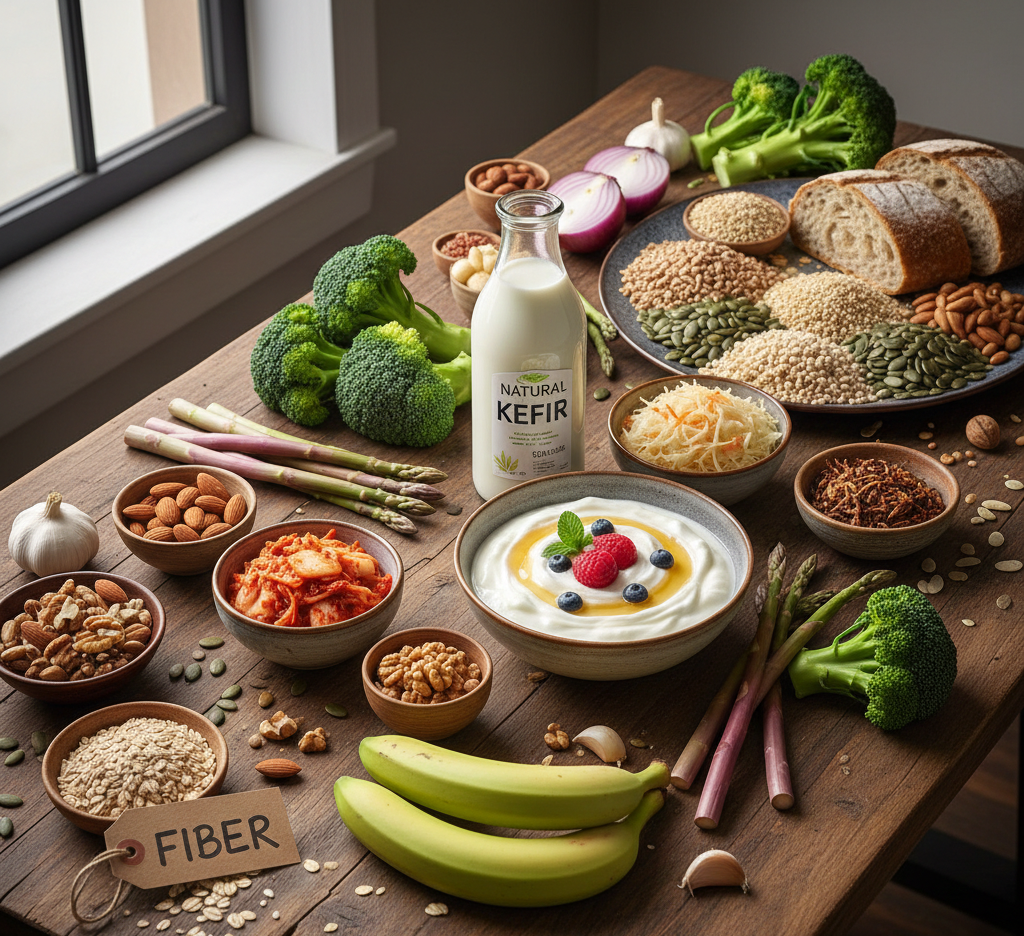
For optimal gut health for men, what you eat plays a major role. The best approach is to gradually add fiber-rich foods to your diet, improving digestion without overwhelming your system. Foods rich in soluble and insoluble fiber are ideal for supporting healthy gut function.
Fermented foods are another great addition. They introduce healthy bacteria to your gut, promoting microbial diversity, which is essential for gut health for men.
| When to use it | Gut-friendly options | Practical tip |
|---|---|---|
| Breakfast | Oatmeal with berries and nuts; yogurt with live cultures (if tolerated) | Keep added sugar modest when possible |
| Lunch | Brown rice, barley, or quinoa with lentils, beans, and veggies | Start with small servings of beans and gradually increase |
| Snack | Popcorn, apples with peanut butter, or trail mix | Pair fiber snacks with fluids to support digestion |
| Dinner | Roasted veggies like broccoli and carrots, or a leafy salad with olive oil | Cooked vegetables are gentler on the stomach than raw |
| Prebiotic add-ons | Oats, barley, beans, asparagus, onions, garlic, slightly green bananas | Rotate these foods for variety and added gut benefits |
| Fermented foods | Yogurt, kefir, sauerkraut, kimchi | Start with small servings, especially if you’re not used to fermented foods |
Symptom-to-Strategy: Match the Fix to the Problem
To improve gut health for men, you need to address specific symptoms with targeted strategies. Whether you’re struggling with constipation, bloating, or reflux, understanding the root cause can help guide your approach.

If symptoms are severe, persistent, or rapidly changing, get medical advice rather than endless guesswork.
| What you’re dealing with most | What to try first | Notes to keep it realistic |
|---|---|---|
| Constipation | Gradual increase in fiber + extra hydration + regular movement | Too much fiber too fast can cause bloating |
| Bloating | Slow fiber ramp + smaller portions of beans + slower eating | Make one change at a time to track results |
| Reflux or heartburn | Smaller meals + slower eating + avoid lying down after meals | Keep track of triggers that might worsen reflux |
| Diarrhea | Hydration and easy-to-tolerate foods while it settles | Consult a doctor if diarrhea persists |
How Long It Takes to Notice Changes in Gut Health for Men
The timeline to see changes in gut health for men varies depending on your habits and the symptoms you’re addressing. Improvements in stool consistency and frequency can happen within two weeks of improving fiber and hydration. However, gas and bloating may temporarily increase when you first ramp up fiber, so don’t be discouraged.
- Days to 2 weeks: Many men see changes in stool consistency and frequency with fiber and hydration improvements
- First 1-2 weeks: Gas can temporarily increase as your gut adjusts to higher fiber
- 2 to 4 weeks: Probiotics or fermented foods can start showing positive effects for some people
- Longer-term: Improved sleep, stress management, and consistent routines often lead to lasting benefits for gut health for men
Mistakes to Avoid When Improving Gut Health for Men
When it comes to gut health for men, the biggest mistake is trying to overhaul everything at once. Rapid changes can disrupt digestion and make it harder to stick with healthy habits.
Here are a few common mistakes to avoid:
- Increasing fiber too quickly without enough fluids
- Eating too fast or skipping meals
- Changing too many foods or supplements at once without knowing the cause of symptoms
- Ignoring constipation or reflux until it’s a bigger issue
- Focusing only on protein while neglecting fiber-rich foods
If You’re Considering Supplements for Gut Health for Men: What to Look For
Supplements can support gut health for men, but they’re not a cure-all. If you choose to use them, focus on single-strain probiotics and make sure the product is high-quality.
Remember, gut health for men begins with food, and supplements should be a secondary consideration after food and lifestyle habits.
| What to look for | Why it matters | Caution |
|---|---|---|
| Single-strain probiotics | Easier to track the effect on gut health for men | Avoid multi-ingredient blends to isolate the cause of changes |
| Clear labeling | Probiotic strain and dosage should be clearly listed | “Proprietary blends” make it difficult to understand what’s in the product |
| Third-party testing | Ensures quality and safety of the supplement | Avoid products that lack third-party verification |
| Start low, then adjust | Probiotics can cause gas and bloating at first | Increase dosage gradually, as needed |
Safety Notes and When to Get Checked Out
Most lifestyle changes for gut health for men are safe, but some symptoms can indicate a more serious issue. If digestive symptoms persist, worsen, or significantly impact your life, it’s time to consult a healthcare professional.
If you experience any of the following, seek medical attention:
| Red flag symptom | Why it matters | What to do |
|---|---|---|
| Blood in stool or black, tarry stools | Could signal internal bleeding | Seek immediate medical care |
| Unexplained weight loss or loss of appetite | Could signal an underlying issue | See a doctor as soon as possible |
| Severe or worsening abdominal pain | Could be a sign of something more serious | Get urgent medical help |
| Persistent fever with digestive symptoms | May suggest infection or inflammation | Get medical attention promptly |
| Dehydration (dizziness, fainting, dark urine) | Fluids and electrolytes may be dangerously low | Get immediate care if dehydration is severe |
| Ongoing constipation or diarrhea | May require targeted treatment | Don’t wait—consult a doctor |
7-Day Starter Plan for Better Gut Health for Men
Here’s a gut health for men starter plan. It’s about one simple habit each day so you don’t feel overwhelmed.
| Day | What to do | Keep it doable |
|---|---|---|
| 1 | Add one fiber-rich food to your meals | Oats, berries, or a side salad works |
| 2 | Add another fiber-rich food + extra water | Spread fluid intake throughout the day |
| 3 | Walk for 10 minutes after a meal | Pick the easiest meal to start with |
| 4 | Slow down during one meal | Take smaller bites, chew slowly |
| 5 | Add a prebiotic-style food | Try beans or a green banana in small portions |
| 6 | Try a fermented food | Yogurt or kefir (if tolerated) in small servings |
| 7 | Set a bathroom time | Pick a consistent time to help form a routine |
FAQ: Gut health and digestion for men
Do men need different gut health strategies than women?
The core strategies are the same because digestion runs on the same physiology: fiber, fluids, movement, sleep, and stress. What often differs is the pattern of triggers, since men may be more likely to run low on fiber, sit for long stretches, or rely on protein-heavy meals that displace plants.
Are probiotics worth it for bloating or irregular stools?
Sometimes, but it’s not guaranteed, and outcomes are strain-specific. If you try one, follow label directions and keep everything else steady so you can tell what’s actually changing.
What’s the simplest first step if I’m constipated?
Start with gradual fiber increases and better hydration, then add consistent daily movement. If constipation is persistent, painful, new and unexplained, or paired with red flags like blood in stool, get checked out.
Can a high-protein diet cause constipation?
It can, especially if it crowds out fiber foods and you’re not drinking enough. Protein isn’t the villain, but low-carb patterns can reduce fruit, beans, and whole grains that support stool bulk and microbial variety.
Should I avoid gluten or try low FODMAP for gut health?
Not automatically, and long-term restriction without guidance can reduce diet variety and make nutrition harder to maintain. If you suspect triggers, a structured approach with reintroduction is usually a better path than cutting major food groups indefinitely.
What foods are usually easiest on digestion?
It depends, but many people do well with oats, rice, potatoes, bananas, berries, cooked vegetables, yogurt or kefir if lactose is not an issue, and simple proteins. If you’re sensitive, cooked plants are often gentler than raw, and smaller servings of beans and fermented foods can be easier than large ones.
When should I stop self-treating and see a clinician?
If symptoms are persistent, worsening, or affecting your daily life, it’s worth getting help. Seek prompt care for blood in stool, black stools, unexplained weight loss, fever with gut symptoms, severe abdominal pain, or dehydration symptoms.
Final Thoughts
Improving gut health for men is a gradual process. It’s about consistency and making small, sustainable changes. Start with fiber, hydration, movement, and stress management, then build from there. With patience and consistency, gut health for men can improve, leading to better digestion and overall wellness.
References
- Healthy Male Team
Available at - https://healthymale.org.au/health-article/what-guys-need-know-about-gut-health
Dr. Seema
Available at - https://www.lalpathlabs.com/blog/best-food-for-gut-health/
GI Associates Staff
Available at- https://giassoc.org/digestive-health-10-habits-for-a-stronger-gut/
- Rupa Health Experts
Available at - https://www.rupahealth.com/post/what-do-probiotics-do-for-men
Healthline Editorial Team
Available at - https://www.healthline.com/nutrition/ways-to-improve-digestion